 Aljezur: Praia de Monte Clérigo
Few places in the Algarve have a history as closely tied to the Atlantic coast as Praia de Monte Clérigo. On Portugal’s southwest shore, this long sandy beach lies below the low, layered cliffs of the Vicentine Coast, part of the Southwest Alentejo and Vicentine Coast Natural Park. The beach belongs to the municipality of Aljezur, whose inland town developed beneath a medieval hilltop castle. Monte Clérigo has long been associated with small-scale fishing, while its open Atlantic setting also makes it a recognised stop for surfing and coastal walks. Rather than the resort-built southern Algarve, this stretch of shore retains a sparse, cliff-and-dune character shaped by the sea.
Generated by AI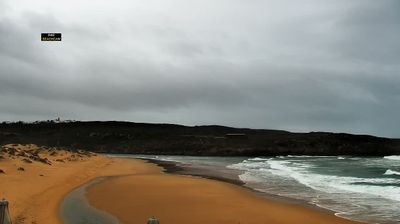
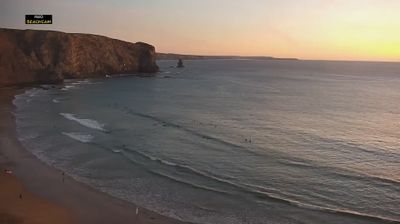
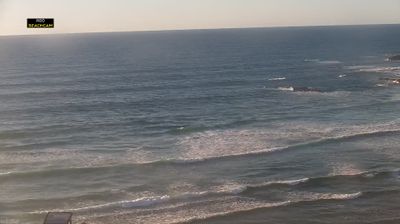
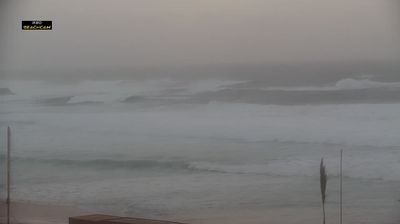
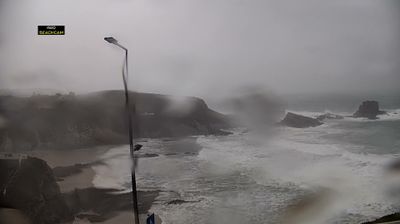
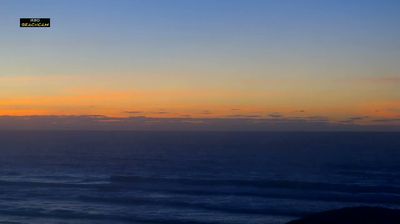
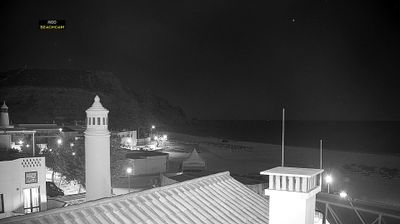
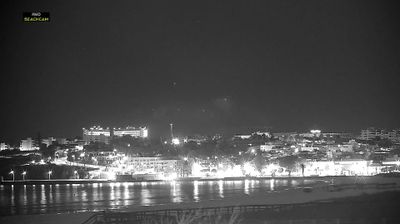

Aljezur straddles the Ribeira de Aljezur in the western Algarve, and its river valley has long set the older hillside quarter apart from the newer town. The ruins of Aljezur Castle crown the slope above, recalling the settlement’s Islamic past before its incorporation into Portugal in 1249. West of town, the municipality reaches the Atlantic shore within the Southwest Alentejo and Vicentine Coast Natural Park, where cliffs and sandy coves define this edge of the Algarve. Aljezur is also associated with the locally grown sweet potato, a protected regional product. See how Aljezur connects the western Algarve with Portugal’s Atlantic coast by browsing webcams nearby.
3 webcams
Faro combines the quieter, cork-oak country of the interior with the maritime character of the Algarve coast in a way that reflects its position within southern Portugal. Around the inland settlements, low hills lead toward the Serra do Caldeirão, a transition zone between the Algarve and Alentejo. Southward, the Ria Formosa forms a long system of lagoons, salt marshes and barrier islands along the Atlantic shore. Faro, the Algarve’s administrative capital, preserves a walled old town, where Faro Cathedral stands on the site of a former mosque. This is an Algarve of small-town markets, cork landscapes and coastal wetlands rather than a single resort strip. View additional webcams nearby to better understand how Faro relates to the Algarve’s interior and Atlantic coast.
30 webcams
Portugal has served as an Atlantic maritime link between Europe, Africa and the Americas since the 15th century. The Atlantic shapes its western and southern shores, while the Douro crosses northern wine country on its way to Porto and the Tagus meets the sea in Lisbon. Belém Tower and the Jerónimos Monastery recall the seaborne expansion of the Portuguese crown, and their Manueline stonework remains a defining feature of the capital. Beyond the cities, the Algarve is known for beaches and limestone cliffs, while Serra da Estrela introduces a highland counterpoint inland. Azulejo tiles, fado and Port wine are enduring elements of Portuguese culture. Find related webcams in the surrounding area to build a fuller picture of Portugal’s Atlantic coast and interior.
176 webcams