 Yakutsk
 has served as an administrative and trading centre in the Sakha Republic since the 17th century. Founded in 1632 as a Russian fort, it developed on the west bank of the Lena River, one of Siberia’s great waterways. Today it is the capital of the Republic of Sakha (Yakutia), a vast northeastern region where Indigenous Sakha culture remains central to local life. The city’s built environment is shaped by continuous permafrost, a defining condition for construction and infrastructure. Yakutsk is also an important academic centre, with the Permafrost Institute and the North-Eastern Federal University contributing to research. Its museums and cultural institutions introduce the languages, traditions and archaeology of northeastern Siberia.
Generated by AI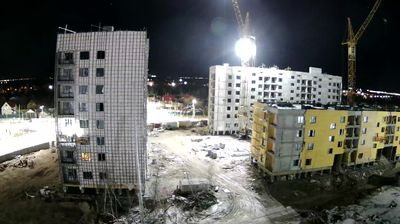

The Lena River defines the setting of Yakutsk — its immense floodplain and seasonal ice conditions shape daily life in a city built on permanently frozen ground. Capital of the Sakha Republic, Yakutsk is one of the world’s largest cities in a permafrost zone, where buildings rely on specialised foundations and winter temperatures can be severe. Founded in 1632 as a Russian fort, it developed into the main administrative and cultural centre of northeastern Siberia. Sakha traditions remain central to the city’s identity, particularly during the summer Ysyakh celebrations. View additional webcams nearby to better understand how Yakutsk relates to the Lena River basin and Sakha Republic.
2 webcams
The Lena River and vast permafrost lowlands define much of the Sakha Republic — an extreme continental climate, immense distances and seasonal river travel shape settlement, transport and everyday life. Covering much of northeastern Russia, this republic is the country’s largest federal subject and reaches from taiga forests to Arctic shores. Yakutsk, its capital, stands on the Lena and was founded as a Russian fort in 1632; it remains a key centre for the Sakha people and the republic’s administration. The region is also internationally associated with diamond mining, notably around Mirny. Winter temperatures and the spring breakup of the Lena set a powerful annual rhythm. Continue through nearby webcams to explore different parts of the Sakha Republic.
13 webcams
Russia has served as a major power between Europe and Asia since the 16th century. Its territory crosses eleven time zones, extending from the Baltic coast and the East European Plain over the Ural Mountains to the Pacific. The Volga, Europe’s longest river, runs through a core of historic Russian settlement, while Lake Baikal in Siberia is the world’s deepest lake. Moscow’s Kremlin and Red Square stand at the centre of the capital’s political and architectural heritage; Saint Petersburg’s Hermitage Museum occupies the Winter Palace. Orthodox churches, Russian-language literature, ballet and long-distance rail travel remain familiar reference points in a country of immense regional contrasts. Continue with other webcams from Russia to see how this part of northern Eurasia connects regionally.
461 webcams