 Vieux-Ferrette
The landscape around Vieux-Ferrette is a rolling mosaic of cultivated fields and woodland in the Sundgau, which has shaped both the built environment and local life. This part of southern Alsace lies close to the Swiss border, where the foothills of the Jura Mountains begin to define the wider setting. Vieux-Ferrette stands beside Ferrette, the historic centre of the former County of Ferrette. Above the town are the ruins of Château de Ferrette, a medieval stronghold associated with the counts who once ruled this corner of Alsace. The surrounding Sundgau is marked by dispersed settlements, farmland and forest, forming a quieter contrast to the more densely settled Rhine plain farther east.
Generated by AI



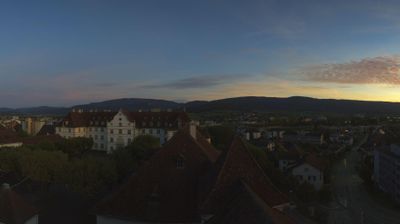
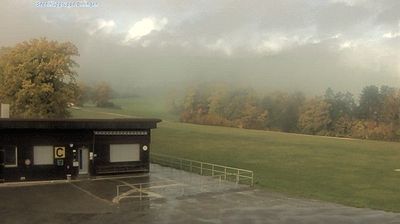


Vieux-Ferrette has served as a rural settlement in the Sundgau region of southern Alsace since the Middle Ages. It stands in the folded foothills of the Alsatian Jura, near the Swiss border and above the Upper Rhine plain. Wooded slopes, pasture and small farms shape this transition between the Rhine lowlands and the limestone uplands. Vieux-Ferrette is a separate commune from neighbouring Ferrette, where the ruins of a medieval castle recall the Counts of Ferrette; their county passed to the Habsburgs through a marriage in 1324. Trace Vieux-Ferrette’s place between the Jura foothills and southern Alsace by browsing webcams nearby.
1 webcam
Grand Est is best known in France for the Champagne vineyards that sustain one of the country’s most celebrated wine traditions. Extending from the Ardennes to Alsace on the German border, this large eastern region unites the historic territories of Alsace, Champagne-Ardenne and Lorraine. The Moselle runs through Lorraine, while the Rhine shapes much of the eastern frontier. Strasbourg, the regional capital, is home to the European Parliament and its celebrated Gothic cathedral; nearby Nancy is distinguished by the UNESCO-listed Place Stanislas. Continue through nearby webcams to explore different parts of Grand Est.
108 webcams
The Atlantic and Mediterranean coastlines, together with the Alps, Pyrenees and broad river basins, define much of France — they support maritime trade, farming, wine regions and travel throughout the year. The Seine runs through Paris, where the Eiffel Tower and the Louvre are among Europe’s most recognised landmarks. The Loire Valley is known for Renaissance châteaux, while Mont-Saint-Michel rises from a tidal bay in Normandy. Regional food traditions are equally distinctive, from Breton seafood to Provençal cooking, with bread, cheese and wine central to everyday life. France’s global cultural influence is evident in its language, literature, fashion and cinema. View additional webcams nearby to better understand how France’s coasts, plains and mountain borders relate to their surroundings.
2.1K webcams