 Munich
Tucked along the Isar River on the Bavarian Plateau, Munich is a place whose character is shaped by its broad urban plain and position in the Alpine foreland. Its centre grew from a settlement founded in 1158 and remains organized around Marienplatz, where the neo-Gothic New Town Hall is known for its Glockenspiel. The twin-domed Frauenkirche is one of the city’s defining landmarks; construction began in 1468 and the church was consecrated in 1494. Beyond the old town, Munich extends through distinct quarters, parks and major museum districts. Bavarian traditions retain a public presence in beer halls, markets and the Oktoberfest, held on the Theresienwiese since 1810.
Generated by AI
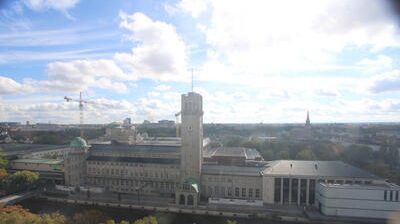
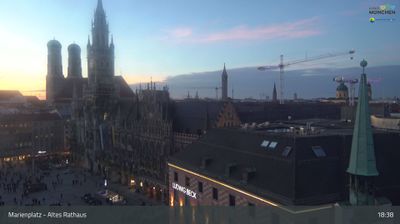
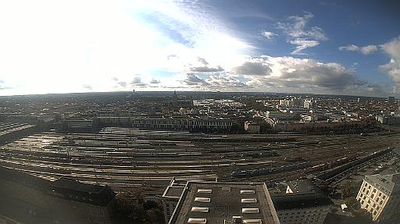

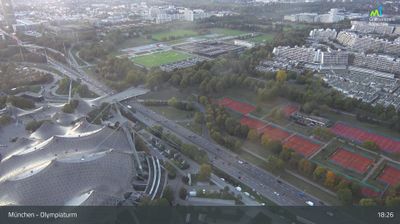
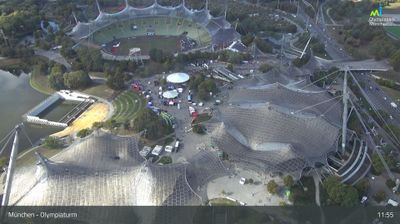

Munich straddles the River Isar in Bavaria, and this setting has linked the city to the Alpine foothills south of it. Marienplatz forms the historic centre, where the neo-Gothic New Town Hall and its Glockenspiel are enduring symbols of civic Munich. Nearby, the Frauenkirche’s twin domed towers shape one of the city’s most recognisable silhouettes. Munich is also inseparable from Oktoberfest, the annual festival held on the Theresienwiese since 1810, while the English Garden follows the Isar north of the centre. Find related webcams across Bavaria to build a fuller picture of Munich and its region.
18 webcams
Built around the early medieval Duchy of Bavaria, Bavaria grew into Germany’s largest federal state. The Danube crosses its broad centre, while the Bavarian Alps form its southern edge and include the Zugspitze, Germany’s highest mountain. Munich is the state capital and the home of Oktoberfest, a festival rooted in an 1810 royal wedding. Beyond the metropolis, Franconia’s vineyards, Swabian towns and Alpine resorts reveal how varied this part of Germany can be. Browse additional webcams from the surrounding area to extend your view of Bavaria.
867 webcams
Germany stretches from the North Sea and Baltic Sea coasts to the Alps on its southern border, encompassing northern plains, river valleys and forested uplands. The Rhine, Danube and Elbe have long connected its regions, while the Black Forest and Bavarian Alps give the south a more dramatic relief. Berlin’s Brandenburg Gate and Museum Island reflect the capital’s role in German history and culture. Cologne Cathedral, a UNESCO World Heritage Site, rises above the Rhine, and the Bauhaus movement, founded in Weimar in 1919, transformed modern design far beyond Germany. Regional cooking, Christmas markets and brewing traditions bring further character to daily life. Browse additional webcams from the surrounding area to extend your view of Germany.
2.8K webcams