 Shaftsbury: US-7
The Taconic Mountains define the setting of Shaftsbury — their wooded foothills and small valleys give this southern Vermont town a dispersed rural character. U.S. Route 7 is the principal north–south road through the community, linking it with Bennington to the south and towns near the Batten Kill to the north. Forest, open land and roadside homes share this part of the Vermont countryside. Shaftsbury also has a literary association: Robert Frost lived at the Stone House during the 1920s, and the property now houses a museum dedicated to the poet. The town stands near the New York border, between the Taconic uplands and Vermont’s Green Mountains.
Generated by AI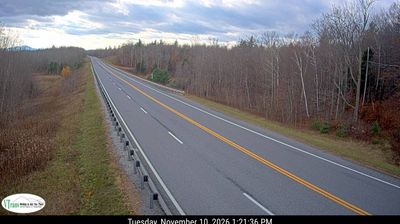
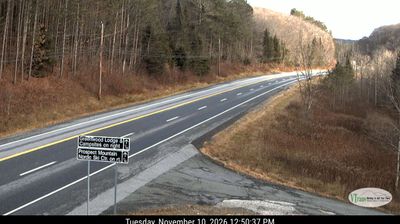

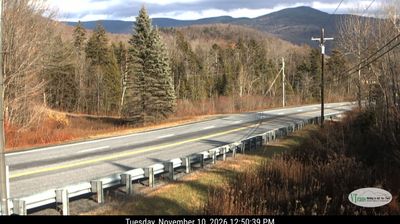
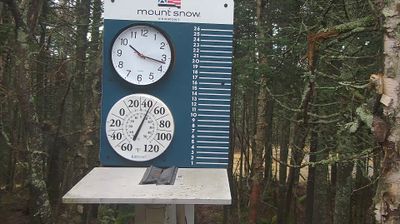
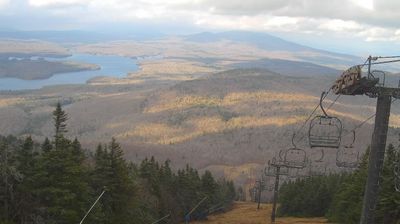
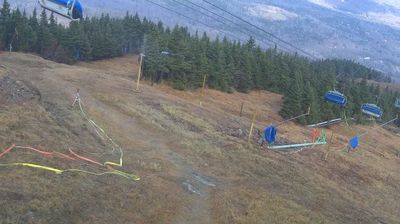
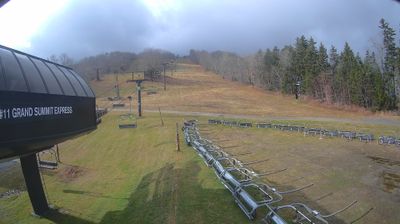


Shaftsbury is best known in Vermont for the Robert Frost Stone House Museum, the former home of the poet and his family from 1920 to 1929. In Bennington County, the town lies in the broad rural country between the Green Mountains and the Taconic Mountains, just north of Bennington. Frost wrote during his years here, and the Stone House on Historic Route 7A remains a key place for understanding that chapter of his life. Farms, wooded hills and quiet local roads give Shaftsbury the character of southwestern Vermont beyond its larger towns. Discover other points of interest through webcams located across Shaftsbury and Vermont.
2 webcams
Vermont is best known in the United States for the Green Mountains, the north–south range that gives the state its defining wooded backbone. These coordinates lie in north-central Vermont, where rolling uplands and narrow valleys lead toward the Lamoille River. Mount Mansfield, rising to 4,393 feet (1,339 metres), is the state’s highest peak and stands farther west in the same mountain region. Lake Champlain forms much of Vermont’s western edge, while the Connecticut River traces its border with New Hampshire. Maple sugaring is a defining seasonal tradition, and Vermont is the nation’s leading maple-syrup producer. Explore nearby places to better understand how north-central Vermont relates to the Green Mountains, river valleys and Lake Champlain.
196 webcams
The Atlantic, Pacific and Gulf coasts define much of the United States — their ports, fisheries and trade routes have long tied the country’s economy to the wider world. Between them, the Rocky Mountains, Great Plains and Mississippi River basin form sharply different regions, from high western ranges to broad agricultural heartlands. Cities carry much of the national story: New York’s Statue of Liberty, a gift from France dedicated in 1886, remains an enduring symbol, while Washington, DC concentrates major federal institutions. Indigenous nations have shaped these lands for millennia, and their living cultures remain essential to the country’s identity. Find related webcams in the surrounding areas to build a fuller picture of the United States.
32K webcams