 Gressoney-La-Trinite
Gressoney-La-Trinité straddles the Lys River in the upper Aosta Valley, and its position below Monte Rosa has made it a mountain settlement and base for high-altitude travel. The municipality includes the hamlets of Tache and Staffal and forms part of the Monterosa Ski area, whose lifts link the Valle del Lys with neighbouring valleys. Its identity is also shaped by the Walser, German-speaking settlers who established communities in these Alpine valleys during the Middle Ages. Their language, architecture and traditions remain a distinctive thread in local culture, while steep pastures and rock faces define the valley above the village.
Generated by AI


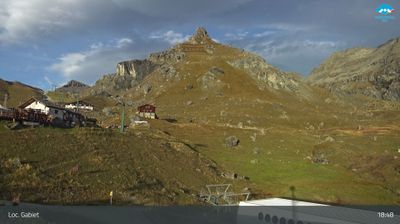


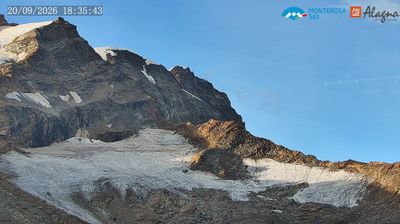

The upper Lys Valley defines the setting of Gressoney-La-Trinité — beneath the Monte Rosa massif, steep alpine terrain has shaped a compact settlement and a life long tied to mountain travel. It is one of the Walser communities of the Aosta Valley, founded by German-speaking settlers in the Middle Ages; their heritage endures in local traditions and in stone-and-timber houses. The village stands on routes leading towards Stafal and the Monterosa Ski area, while summer walkers head for high pastures and mountain paths. Near the head of the valley, Gressoney-La-Trinité has a distinctly high-alpine character rather than the urban atmosphere of Aosta. See how Gressoney-La-Trinité fits into the wider Lys Valley and Aosta Valley by browsing webcams nearby.
12 webcams
The terrain of Aosta Valley ranges from the broad Dora Baltea valley floor around Aosta to glaciated Alpine massifs along its French and Swiss borders, creating sharp changes in altitude and climate. Italy’s smallest region is framed by some of the Alps’ best-known high mountain country, including the Mont Blanc area and Gran Paradiso National Park. Aosta preserves the legacy of the Roman town of Augusta Praetoria in its city walls, Porta Praetoria and Roman Theatre. Stone villages, alpine pastures and fortified castles reflect a culture shaped by mountain routes and French-Italian influences; Fontina cheese is among its established local specialities. Discover other points of interest through webcams located across Aosta Valley.
81 webcams
Among the countries of southern Europe, Italy stands out for its Mediterranean coastline and cities marked by the legacy of ancient Rome. The Alps form its northern frontier, while the Apennines run down the peninsula and the Po crosses the broad plain of the north. Rome’s Colosseum and Roman Forum recall the ancient empire; Florence is closely associated with the Renaissance, and Venice is built across a lagoon on the Adriatic. Food changes markedly between regions, from olive-oil cooking in the south to rice dishes in the Po Valley. Sicily and Sardinia add distinct island identities to a country whose regions retain strong local character. Explore nearby webcam locations that provide complementary perspectives on Italy’s coasts, cities and mountains.
3.1K webcams