 Najac: Najac Castle
Tucked along a sweeping bend of the Aveyron River, Najac is a place whose character is shaped by its narrow rocky ridge. The village stretches along this spine in the Aveyron department of Occitania, with stone houses and slate roofs following its single main street. At the summit stands Château de Najac, a 13th-century royal fortress commissioned under Alphonse of Poitiers, brother of King Louis IX. Its tall keep and defensive position reflect the crown’s effort to control this part of Rouergue, the historic province that preceded today’s department. Below, the Aveyron loops through wooded slopes, giving Najac an unusually linear form and a strong connection between its medieval fabric and the valley.
Generated by AI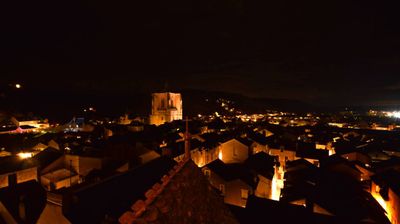



Among the settlements of Occitania, Najac stands out for its long medieval street running along a ridge above the Aveyron River. In the Aveyron department, wooded slopes and the river’s bends enclose a compact sequence of stone houses. At the ridge’s western end stands the Château de Najac, a 13th-century royal fortress whose tall keep recalls the strategic importance of this position. Najac belongs to Les Plus Beaux Villages de France, an association recognising small French towns and villages of notable heritage. Explore nearby locations that reveal further facets of the Aveyron valley and Occitania.
1 webcam
Occitania occupies a broad southern belt in France, extending from the Massif Central and the Pyrenees to the Mediterranean coast. These coordinates lie in the inland Haut-Languedoc area, where wooded hills and reservoirs around the upper Agout contrast with coastal plains farther east. Toulouse, the regional capital, stands on the Garonne and is associated with the Canal du Midi, a 17th-century waterway linking the city with the Mediterranean and listed as a UNESCO World Heritage Site since 1996. Roman sites, fortresses connected with the Cathar past, and the Occitan language tradition reveal the many layers of southern French identity. Continue through nearby webcams to explore different parts of Occitania.
214 webcams
The Atlantic and Mediterranean coastlines, together with the Alps, Pyrenees and broad river basins, define much of France — they support maritime trade, farming, wine regions and travel throughout the year. The Seine runs through Paris, where the Eiffel Tower and the Louvre are among Europe’s most recognised landmarks. The Loire Valley is known for Renaissance châteaux, while Mont-Saint-Michel rises from a tidal bay in Normandy. Regional food traditions are equally distinctive, from Breton seafood to Provençal cooking, with bread, cheese and wine central to everyday life. France’s global cultural influence is evident in its language, literature, fashion and cinema. View additional webcams nearby to better understand how France’s coasts, plains and mountain borders relate to their surroundings.
2.1K webcams