 Arta Terme
Built around thermal springs in the Bût valley, Arta Terme grew into a small spa town in the Carnic Alps of Friuli-Venezia Giulia. Its thermal establishment uses sulphurous water, while the municipality’s hamlets extend across the valley floor and lower slopes of Carnia. The Bût runs south through this narrow Alpine corridor toward Tolmezzo, framed by wooded ridges and limestone outcrops. Arta Terme belongs to a region where Friulian and Alpine traditions meet, reflected in local food, language and the close-knit pattern of mountain settlements. The scale here remains rural and mountainous, with houses and fields set below steep forested slopes.
Generated by AI

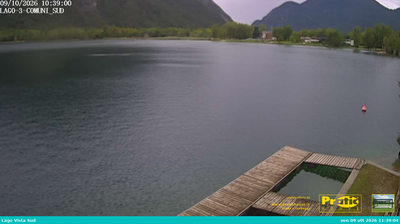


Arta Terme is best known within Friuli-Venezia Giulia for the sulphurous thermal water of Fonte Pudia, used by its spa facilities. The town lies in Carnia’s Val Bût, where the Bût stream runs through an Alpine valley north of Tolmezzo. Its road route continues towards the Plöcken Pass on the Austrian frontier, while the surrounding Carnic Alps give the settlement a distinctly mountain character. Friulian, a regional language of Friuli, is traditionally spoken here alongside Italian. Discover other points of interest through webcams located across Carnia.
1 webcam
Friuli-Venezia Giulia is best known within Italy for terrain that runs from the Julian Alps across the Friulian plain to the Adriatic. Bordering Austria and Slovenia in Italy’s northeast, it has long brought together Italian, Friulian, Slovenian and German-speaking communities. The Tagliamento flows through Friuli toward the sea, while the limestone Carso plateau rises behind Trieste. Aquileia preserves important Roman archaeological remains and an early Christian basilica; Trieste, meanwhile, developed under Habsburg rule into a major port. Browse other webcams across Friuli-Venezia Giulia to place this borderland in a wider Italian and Central European context.
96 webcams
Among the countries of southern Europe, Italy stands out for its Mediterranean coastline and cities marked by the legacy of ancient Rome. The Alps form its northern frontier, while the Apennines run down the peninsula and the Po crosses the broad plain of the north. Rome’s Colosseum and Roman Forum recall the ancient empire; Florence is closely associated with the Renaissance, and Venice is built across a lagoon on the Adriatic. Food changes markedly between regions, from olive-oil cooking in the south to rice dishes in the Po Valley. Sicily and Sardinia add distinct island identities to a country whose regions retain strong local character. Explore nearby webcam locations that provide complementary perspectives on Italy’s coasts, cities and mountains.
3.1K webcams