 Mainz: Johannes Gutenberg University Mainz Botanical Garden
Mainz, home to the Johannes Gutenberg University Botanical Garden, lies along the Rhine’s left bank, where the broad Upper Rhine Plain meets the rolling hills of Rheinhessen. The garden forms part of the university campus in the city’s west and maintains living plant collections for research, teaching and public education. Cultivated beds and mature trees bring extensive greenery into a largely urban setting. The university bears the name of Johannes Gutenberg, the Mainz-born pioneer of movable-type printing. In the city centre, Mainz Cathedral, begun in the 10th century, remains a major Romanesque landmark, while the Rhine continues to shape the city’s trade routes and waterfront identity.
Generated by AI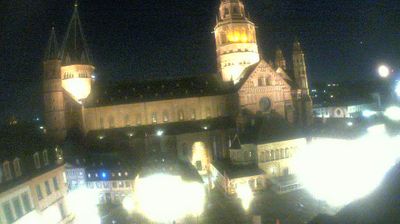





Mainz straddles the Rhine corridor in Rhineland-Palatinate, a strategic riverside setting that made it an important Roman settlement and later an electoral capital. The old town rises beside the Rhine, with Mainz Cathedral, begun in 975, anchoring its market-square quarter. Johannes Gutenberg was born here around 1400, and the Gutenberg Museum traces the city’s central role in the history of printing. Carnival season is another defining tradition: Mainz is one of Germany’s principal centres of Fastnacht, marked by parades and satirical pageantry. Find related webcams in the Rhine-Main area to build a fuller picture of Mainz and its river region.
3 webcams
The Rhine and Moselle define much of Rhineland-Palatinate – their valleys have long concentrated vineyards, river transport and historic towns. Inland, the wooded Hunsrück plateau contrasts with the vine-covered slopes of the Moselle, Nahe and Mittelrhein wine areas. Trier preserves the Porta Nigra, a Roman city gate within the UNESCO-listed Roman Monuments of Trier. The state also includes part of the UNESCO-listed Upper Middle Rhine Valley, where castles, terraces and riverside settlements shape a celebrated cultural landscape. Wine festivals and the autumn harvest remain central to local life. Browse other webcams across Rhineland-Palatinate to place this setting in a wider geographic context.
98 webcams
Germany stretches from the North Sea and Baltic Sea coasts to the Alps on its southern border, encompassing northern plains, river valleys and forested uplands. The Rhine, Danube and Elbe have long connected its regions, while the Black Forest and Bavarian Alps give the south a more dramatic relief. Berlin’s Brandenburg Gate and Museum Island reflect the capital’s role in German history and culture. Cologne Cathedral, a UNESCO World Heritage Site, rises above the Rhine, and the Bauhaus movement, founded in Weimar in 1919, transformed modern design far beyond Germany. Regional cooking, Christmas markets and brewing traditions bring further character to daily life. Browse additional webcams from the surrounding area to extend your view of Germany.
2.1K webcams