 Orchard Valley: I 25 College Drive - I 80 Interchange
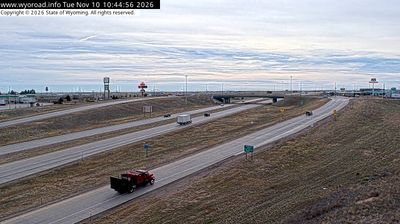
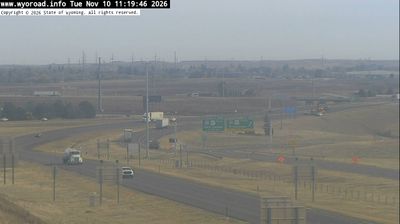
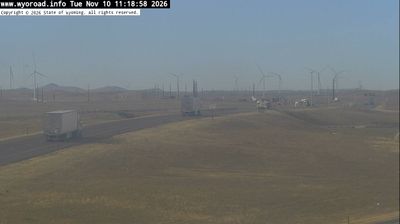
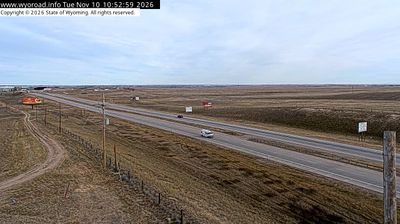
Few places in southeastern Wyoming have a history as closely tied to transportation routes as Orchard Valley. This part of Laramie County lies on the High Plains at Cheyenne’s southern edge, where Interstate 25 meets Interstate 80 and open parcels sit beside freight and service businesses. Cheyenne developed after the Union Pacific Railroad selected the site in 1867, and rail and road connections still shape the area’s working character. The nearby city also hosts Cheyenne Frontier Days, the annual rodeo and western celebration established in 1897. Orchard Valley forms a practical counterpart to central Cheyenne: an urban fringe defined by long-distance travel, logistics and the broad plains of southeastern Wyoming.
Generated by AI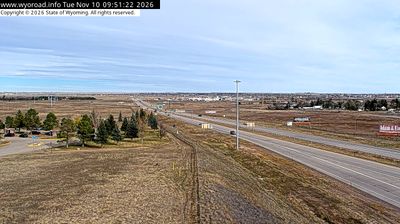




Wyoming stretches from the Montana border to its frontiers with Colorado and Utah, encompassing the high Rockies, broad basins, and Great Plains. The Continental Divide crosses the state, while the Wind River and Bighorn River drain contrasting sides of its interior. In the northwest, Yellowstone National Park—established in 1872 as the world’s first national park—and Grand Teton National Park place geothermal country and sharp mountain relief at the centre of Wyoming’s identity. Ranching remains integral to its open-country culture, alongside communities shaped by railroads, energy, and outdoor travel. Discover how Wyoming connects with the wider American West by browsing webcams nearby.
695 webcams
The Atlantic, Pacific and Gulf coasts define much of the United States — their ports, fisheries and trade routes have long tied the country’s economy to the wider world. Between them, the Rocky Mountains, Great Plains and Mississippi River basin form sharply different regions, from high western ranges to broad agricultural heartlands. Cities carry much of the national story: New York’s Statue of Liberty, a gift from France dedicated in 1886, remains an enduring symbol, while Washington, DC concentrates major federal institutions. Indigenous nations have shaped these lands for millennia, and their living cultures remain essential to the country’s identity. Find related webcams in the surrounding areas to build a fuller picture of the United States.
32K webcams