 Zascianki
The wooded margins of Knyszyn Forest define the setting of Zaścianki — a compact settlement of detached homes set among gently rolling, tree-lined ground east of Białystok. Administratively, it belongs to the gmina of Supraśl in Poland’s Podlaskie Voivodeship, where residential development transitions quickly into the extensive forest country of northeastern Poland. Zaścianki forms part of the wider Białystok urban area while retaining a distinctly low-rise character. The nearby town of Supraśl is an important local cultural centre, noted for the Orthodox Monastery of the Annunciation, founded in the early 16th century. This setting reflects the borderland character of Podlasie, shaped by Polish, Belarusian, Lithuanian and Jewish traditions.
Generated by AI




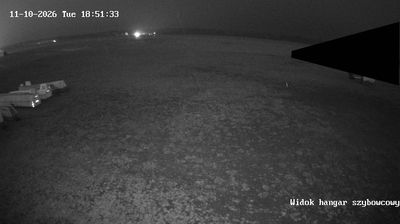
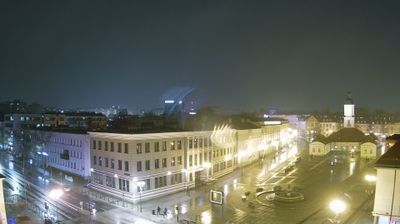
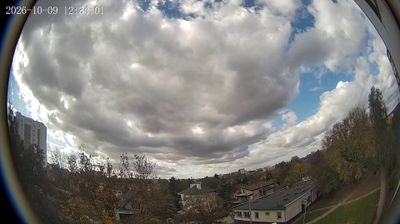
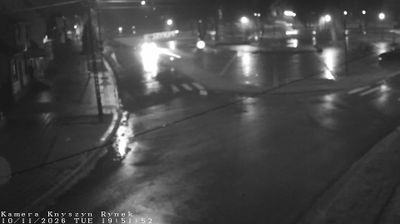

Zaścianki combines a quiet residential character with the proximity of a regional capital, reflecting its position on Białystok’s eastern edge in the lowland landscape of Podlasie. The Biała River runs through nearby Białystok before joining the Supraśl. This borderland region has long been shaped by Polish, Belarusian and Lithuanian communities, while Białystok is known for the 18th-century Branicki Palace, a major Baroque residence. Browse other webcams across Podlaskie Voivodeship to place Zaścianki in a wider geographic context.
1 webcam
Built around the Narew and Bug river systems, Podlaskie Voivodeship grew into Poland’s northeastern borderland, where lowlands meet extensive forests and wetlands. The Biebrza marshes, protected in Biebrza National Park, are among the region’s defining habitats, while the Narew flows through a network of channels and floodplain meadows. Białowieża Forest, shared with Belarus and inscribed on UNESCO’s World Heritage List, preserves one of Europe’s last large remnants of primeval lowland forest and its European bison. Białystok is the regional capital, and Podlaskie also carries the heritage of Poland’s Lipka Tatars, notably in Kruszyniany and Bohoniki. Trace this northeastern Polish region’s place in the wider borderland by browsing webcams nearby.
25 webcams
Poland stretches from the Baltic Sea coast in the north to the Carpathian Mountains along its southern frontier, encompassing broad lowlands, lake districts and upland ranges. The Vistula, the country’s longest river, links Kraków and Warsaw before reaching the Baltic near Gdańsk, while the Masurian Lake District is defined by a dense network of lakes. Kraków’s historic centre, including Wawel Castle, recalls Poland’s former royal capital; Warsaw’s rebuilt Old Town speaks to the city’s recovery after the Second World War. The Białowieża Forest preserves one of Europe’s last primeval lowland forests and is home to European bison. Follow how Poland’s regions relate to one another by browsing webcams across the country.
718 webcams