 Kecskemet: Kiskecskemet: Kecskemét, Vízmű utca -> Vízmű utca
Kecskemét lies on the Danube–Tisza Interfluve in Hungary’s Great Plain, a position that helped it develop as a market town serving the surrounding sandy farmland. The city is closely associated with apricot growing and Kecskeméti barackpálinka, a traditional Hungarian apricot brandy. Its centre is marked by the ornate Art Nouveau City Hall, designed by Ödön Lechner and Gyula Pártos and completed in 1897. Composer Zoltán Kodály was born here, and the Kodály Institute continues his educational legacy. As the seat of Bács-Kiskun County, Kecskemét combines civic institutions with broad streets and low-rise neighbourhoods spreading across the plain.
Generated by AI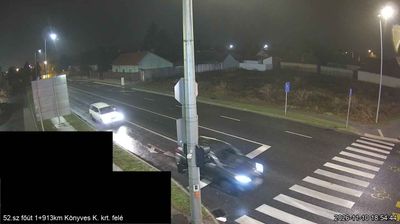
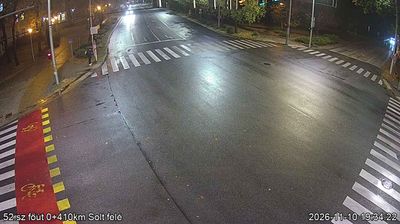
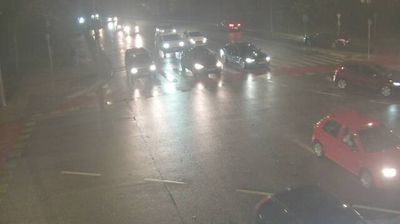


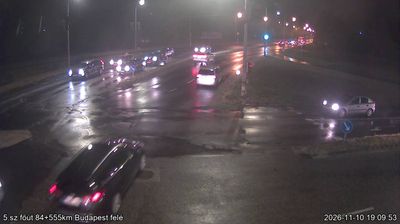


Kecskemét lies on the Danube–Tisza Interfluve in the Great Hungarian Plain, where level, open country stretches between Hungary’s two great rivers. The city is a regional centre between Budapest and Szeged, with a compact core marked by the ornate Art Nouveau City Hall and the Cifra Palace, a landmark of early 20th-century Hungarian Secession. Composer and music educator Zoltán Kodály was born here in 1882, and the Kodály Institute continues his international legacy in music education. Kecskemét is also closely associated with apricot growing and Kecskeméti barackpálinka. Discover further points of interest through webcams across Kecskemét and the Great Hungarian Plain.
8 webcams
Built around the Tisza River basin and the trading routes of the Great Hungarian Plain, Great Plain and North developed into a broad region where open farmland meets Hungary’s northern hills. The Tisza and its floodplain have long influenced settlement and agriculture, while the plains retain the puszta character associated with horse breeding and herding. Hortobágy National Park, Hungary’s first national park and a UNESCO World Heritage site, safeguards a cultural landscape of grassland, wetlands and traditional pastoral use. Farther north, the terrain rises toward the country’s mountain districts. Continue with other webcams from the area to see how this part of Hungary connects between the plain and northern uplands.
274 webcams
Hungary combines a long urban tradition with expansive lowland horizons in a way that reflects its position within the Carpathian Basin. The Danube runs through Budapest, separating the hills of Buda from the grand boulevards of Pest, where the Hungarian Parliament Building stands on the riverbank. Beyond the capital, the Great Hungarian Plain shapes much of the east, while Lake Balaton, Central Europe’s largest lake, draws summer visitors to its shores. Thermal bathing remains part of everyday life, and the Tokaj region is internationally known for its historic sweet wines. Explore nearby webcam locations that provide complementary perspectives on Hungary.
743 webcams