 Helmstedt
 straddles the western edge of the Lappwald in Lower Saxony, and its position on the route toward Magdeburg gave the town strategic importance. Its medieval centre grew around the former Benedictine monastery of St Ludgeri, whose Romanesque church remains a defining monument. From 1576 until 1810, the University of Helmstedt made the town an intellectual centre; the Renaissance Juleum was built for the university and still stands in the old town. Helmstedt later became closely associated with the nearby inner-German border crossing at Marienborn, a central transit point during Germany’s division. The surrounding district combines open agricultural land with the wooded Lappwald.
Generated by AI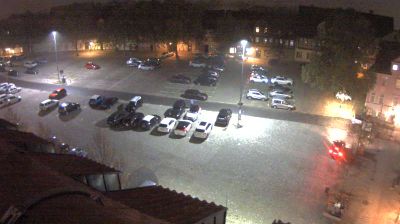

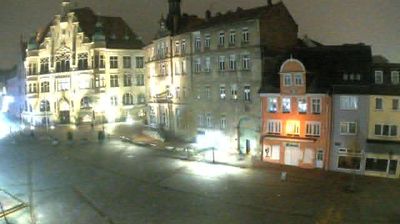


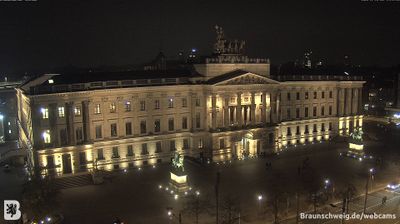

Built around the Benedictine monastery of St Ludgerus, Helmstedt developed into a historic university town between the Elm hills and the Lappwald forest. The University of Helmstedt, founded in 1576, was among northern Germany’s important early-modern universities; its Juleum Novum remains the city’s most distinctive Renaissance building. East of town, the former Helmstedt–Marienborn border crossing recalls the decades when this route formed a principal transit link between West Germany and East Germany. Timber-framed houses, church towers and traces of the old town walls give the compact centre a strongly regional character. Browse additional webcams from the surrounding area to extend your view of Helmstedt and Lower Saxony.
4 webcams
Lower Saxony extends from the North Sea coast to the Harz Mountains, encompassing Wadden Sea mudflats, broad lowlands and wooded uplands. At its northern edge, the Lower Saxon Wadden Sea forms part of the UNESCO-listed Wadden Sea, shaped twice daily by the tides. The Weser crosses the state on its way to the North Sea, while the Elbe marks much of its northeastern border. Inland, the Lüneburg Heath is associated with heather moorland and long-standing sheep farming. Hanover, the state capital, is known for the Herrenhausen Gardens, whose Great Garden is a major baroque ensemble. Explore further webcams across Lower Saxony to place the region in its wider geographic context.
198 webcams
Germany stretches from the North Sea and Baltic Sea coasts to the Alps on its southern border, encompassing northern plains, river valleys and forested uplands. The Rhine, Danube and Elbe have long connected its regions, while the Black Forest and Bavarian Alps give the south a more dramatic relief. Berlin’s Brandenburg Gate and Museum Island reflect the capital’s role in German history and culture. Cologne Cathedral, a UNESCO World Heritage Site, rises above the Rhine, and the Bauhaus movement, founded in Weimar in 1919, transformed modern design far beyond Germany. Regional cooking, Christmas markets and brewing traditions bring further character to daily life. Browse additional webcams from the surrounding area to extend your view of Germany.
2.8K webcams