 Noasca: Cascata di Noasca
Cascata di Noasca sits above the Orco Valley in Piedmont, Italy, where the Noaschetta stream drops down a steep rock face beside the village of Noasca. The cascade is a defining feature of this compact settlement in the Valle Orco, a valley leading towards the Gran Paradiso massif. Noasca lies within Gran Paradiso National Park, established in 1922 as Italy’s first national park. Forested slopes, exposed rock and village buildings beneath the waterfall give the settlement a distinctly alpine character. The valley road continues from here towards Ceresole Reale.
Generated by AI
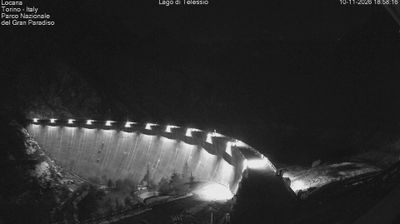
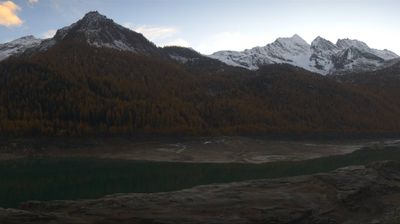
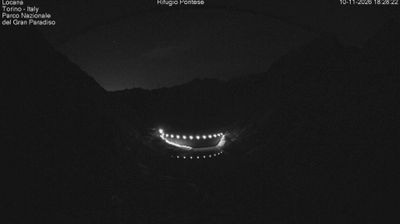
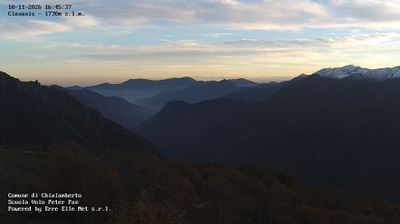

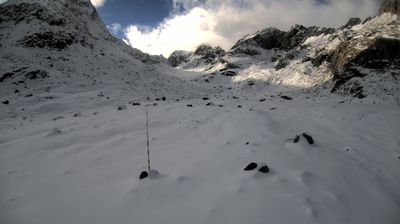

Few towns in Piedmont have a history as closely tied to the protection of Alpine wildlife as Noasca. Set in the Orco Valley, the municipality lies within Gran Paradiso National Park, Italy’s first national park, founded in 1922. The valley was formerly part of King Victor Emmanuel II’s Gran Paradiso hunting reserve, created to safeguard the Alpine ibex; that legacy still shapes the area’s identity. Noasca is also known for its waterfall, while the road through the valley continues towards Ceresole Reale and the high Nivolet Pass. Browse additional webcams from the surrounding area to extend your view of the Orco Valley.
2 webcams
Piedmont occupies Italy’s northwestern corner, between the Alps, the Apennines and the Po Valley. The Po, Italy’s longest river, begins in the Cottian Alps and flows east across the region’s plains, while vine-covered hills define the Langhe, Roero and Monferrato areas. Turin, Piedmont’s principal city, was the first capital of unified Italy from 1861 to 1865 and remains closely associated with the House of Savoy, grand boulevards and chocolate-making. Beyond the city, the region’s identity ranges from Alpine valleys to rice fields around Vercelli and renowned wine country. Move on to other webcams in the region to compare landscapes and settings around Piedmont.
313 webcams
Among the countries of southern Europe, Italy stands out for its Mediterranean coastline and cities marked by the legacy of ancient Rome. The Alps form its northern frontier, while the Apennines run down the peninsula and the Po crosses the broad plain of the north. Rome’s Colosseum and Roman Forum recall the ancient empire; Florence is closely associated with the Renaissance, and Venice is built across a lagoon on the Adriatic. Food changes markedly between regions, from olive-oil cooking in the south to rice dishes in the Po Valley. Sicily and Sardinia add distinct island identities to a country whose regions retain strong local character. Explore nearby webcam locations that provide complementary perspectives on Italy’s coasts, cities and mountains.
3.1K webcams