 Krasnodar
 sits on the right bank of the Kuban River in Krasnodar Krai, Russia, where a major southern city spreads across the low plains north of the Caucasus. Founded in 1793 as Yekaterinodar, it was established for the Black Sea Cossacks and became an important administrative centre of the Kuban region. The city was renamed Krasnodar in 1920 and is now the administrative centre of Krasnodar Krai. Its broad urban fabric combines residential districts and commercial streets with parks, while the Kuban remains the defining waterway along its southern edge. Krasnodar is closely associated with Kuban Cossack traditions, maintained through music, dance and the Kuban Cossack Choir.
Generated by AI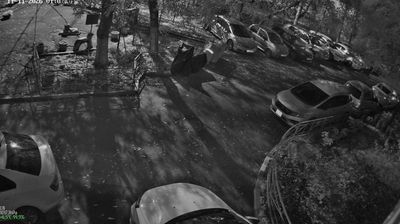
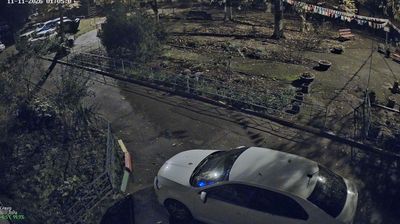
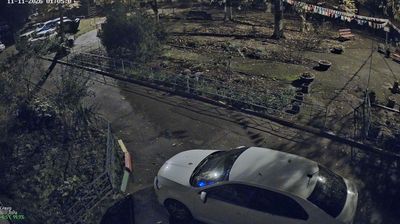
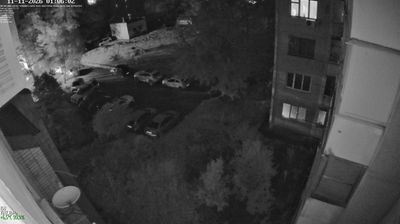
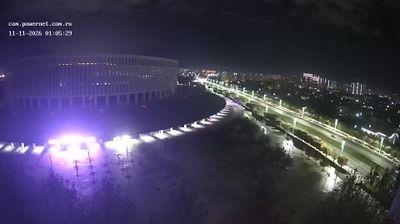
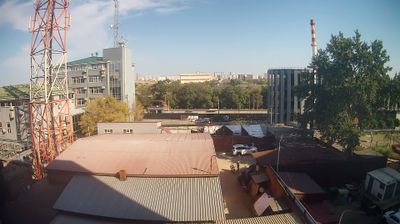
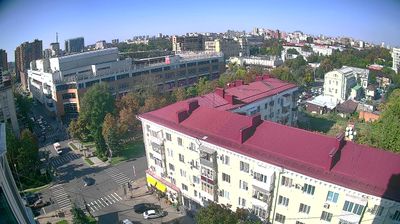

The Kuban River defines the setting of Krasnodar — flowing along the city’s southern side, it has long connected this regional capital with the agricultural plains of southern Russia. Founded in 1793 as Yekaterinodar for the Black Sea Cossacks, the settlement grew into an important administrative and commercial centre; it received its present name in 1920. Central Krasnodar combines broad boulevards and late-imperial buildings with newer public spaces. The 2016 Krasnodar Stadium and its adjoining park have become prominent additions to the city’s urban fabric. Explore nearby webcam locations that provide complementary perspectives on Krasnodar and the Kuban region.
8 webcams
Krasnodar Krai extends from the Sea of Azov and the Kuban lowlands to the Black Sea coast and the Greater Caucasus, encompassing fertile steppe, river plains and subtropical shores. At its centre, Krasnodar stands on the Kuban River, the waterway that gives the wider Kuban region much of its agricultural identity. Vineyards and grain fields occupy much of the north, while the south shifts toward resort towns and forested mountains. Novorossiysk is a major Black Sea port, and Sochi hosted the 2014 Winter Olympics. Cossack traditions remain an important part of the region’s cultural identity. Continue with other webcams from Krasnodar Krai to see how this part of southern Russia connects the Black Sea coast with the Caucasus.
14 webcams
Russia has served as a major power between Europe and Asia since the 16th century. Its territory crosses eleven time zones, extending from the Baltic coast and the East European Plain over the Ural Mountains to the Pacific. The Volga, Europe’s longest river, runs through a core of historic Russian settlement, while Lake Baikal in Siberia is the world’s deepest lake. Moscow’s Kremlin and Red Square stand at the centre of the capital’s political and architectural heritage; Saint Petersburg’s Hermitage Museum occupies the Winter Palace. Orthodox churches, Russian-language literature, ballet and long-distance rail travel remain familiar reference points in a country of immense regional contrasts. Continue with other webcams from Russia to see how this part of northern Eurasia connects regionally.
462 webcams