 Weppersdorf: VK_S31_066,771-F2-RP
Few places in Burgenland have a history as closely tied to the former Hungarian borderlands as Gemeinde Weppersdorf. This municipality lies in central Burgenland, in the lowland country east of the Alps. Its constituent communities include Weppersdorf, Kalkgruben and Tschurndorf, set among agricultural land and road connections within eastern Austria. Burgenland became an Austrian federal state in 1921 after the dissolution of the Habsburg monarchy, a change that still explains the region’s borderland identity. Weppersdorf represents the working rural character of Mittelburgenland rather than an urban centre.
Generated by AI
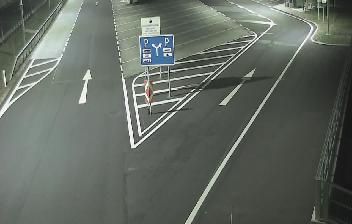

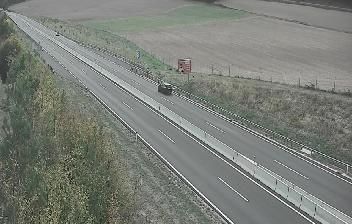
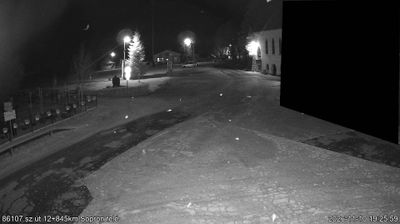


Gemeinde Weppersdorf has served as a rural settlement in central Burgenland since the Middle Ages. Set amid gentle farmland between the Landseer Berge and the Rabnitz valley, the municipality brings together Weppersdorf, Kalkgruben and Tschurndorf. It lies in Austria’s eastern borderland, a region whose modern identity was shaped when Burgenland became part of Austria in 1921 after centuries under the Kingdom of Hungary. Fields, low wooded hills and village life give this corner of the province a quiet, distinctly local character. Browse additional webcams from central Burgenland to extend your view of the Rabnitz valley.
5 webcams
Among Austria’s regions, Burgenland stands out for its Pannonian character, where vineyards, gentle hills and the reed-fringed Neusiedler See meet the Hungarian border. Austria’s easternmost state has a warmer, drier climate than much of the country, and winegrowing is central to its identity; Blaufränkisch is particularly associated with the Mittelburgenland area. The shallow lake and surrounding wetlands form part of the Fertő/Neusiedlersee Cultural Landscape, a UNESCO World Heritage site shared with Hungary. Eisenstadt, the state capital, is home to Esterházy Palace, closely linked to composer Joseph Haydn’s long service at the Esterházy court. Discover other points of interest through webcams located across Burgenland.
82 webcams
Austria stretches from the Bohemian Massif along its northern edge to the Carnic Alps on the Italian border, encompassing high Alpine ranges and the Danube lowlands. The Danube links cities including Linz and Vienna, while the Grossglockner, at 3,798 metres, is the country’s highest mountain. Vienna developed for centuries as the seat of the Habsburg court, leaving imperial architecture around the Hofburg and Schönbrunn Palace. Salzburg is closely associated with Wolfgang Amadeus Mozart, who was born there in 1756. Alpine Tyrol, wine-growing areas east of Vienna and the lakes of Salzkammergut add markedly different regional identities. Browse other webcams across Austria to place this setting in a wider geographic context.
2.6K webcams