 Jelsa
Jelsa sits on the northern coast of Hvar Island in Croatia's Split-Dalmatia County, where a sheltered bay meets the island's cultivated interior. Its compact core is built in the pale stone and red-tiled roofs characteristic of central Dalmatia, with streets and small squares leading down to the waterfront. Jelsa developed as a port settlement serving the island's agricultural communities; viticulture and olive growing remain part of Hvar's identity. The town is also close to the Stari Grad Plain, a UNESCO World Heritage cultural landscape whose Greek field divisions have endured for more than two millennia. The harbour and centre retain the scale of an everyday island town, while providing a useful base for exploring Hvar's north coast.
Generated by AI
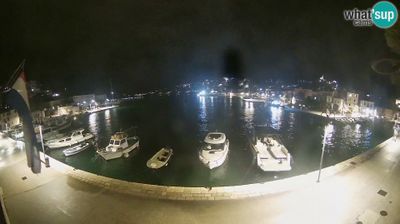

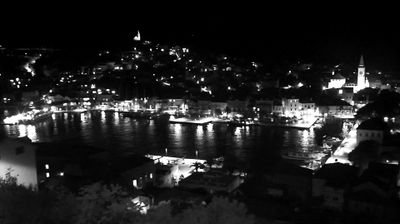
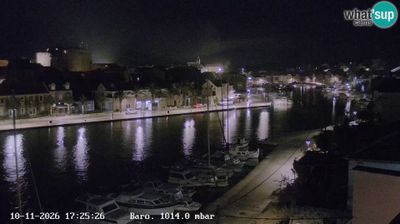
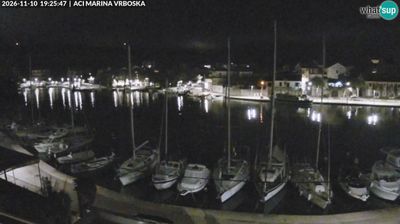
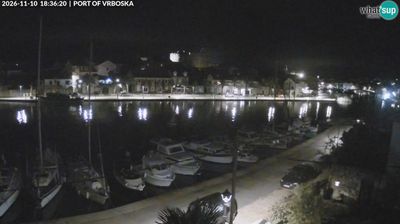


Few towns in Dalmatia have a history as closely tied to the vineyards and olive groves of Hvar Island as Jelsa. Set on a sheltered bay on Hvar’s northern coast, it faces the Adriatic and is backed by cultivated slopes rather than a dense urban hinterland. The island’s agricultural identity is embodied by the Stari Grad Plain, a UNESCO World Heritage cultural landscape preserving a land-division system introduced by Greek colonists in the 4th century BC. Jelsa’s harbour, waterfront cafés and stone-built centre give it a maritime rhythm, while beaches and coves extend along the surrounding coast. Explore nearby webcam locations that provide complementary perspectives on Jelsa and Hvar Island.
1 webcam
Built around the Adriatic coast, island ports and routes linking the hinterland to the sea, Split-Dalmatia County grew into Croatia’s central Dalmatian region. Its territory extends from the Cetina River and the Biokovo range to the islands of Brač, Hvar, Šolta and Vis. At its urban heart, Split is defined by Diocletian’s Palace, a Roman imperial complex whose historic core is inscribed on the UNESCO World Heritage List. The Makarska Riviera, old fishing settlements and vineyards lend the county a strongly maritime Mediterranean character. Brač, where these coordinates lie, is known for its pale limestone. Discover other points of interest through webcams located across Split-Dalmatia County.
66 webcams
Croatia occupies a long Adriatic coastline in southeastern Europe. Its shore is broken into islands and sheltered coves, while the Dinaric Alps rise inland and the Danube forms part of its eastern border. Dubrovnik’s fortified old city faces the sea, and Split grew around Diocletian’s Palace, a Roman complex begun in the early fourth century. Inland, Plitvice Lakes National Park is known for terraced lakes linked by waterfalls and has been a UNESCO World Heritage Site since 1979. Istrian olive groves, Zagreb and Slavonia’s vineyards reveal distinct regional identities. Explore nearby webcam locations that provide complementary perspectives on the Adriatic coast and Croatia’s interior.
381 webcams