 Stafa
Stäfa lies along the northern shore of Lake Zurich, where settled lakeside ground rises into the vineyard slopes of the Pfannenstiel region. This municipality in the canton of Zurich combines a built-up shoreline with orchards, vines and wooded hills above the water; its setting has long connected it with other communities around the lake. Viticulture remains part of local identity, with vineyards producing regional Zurich wines. Stäfa also has a place in Swiss political history through the Stäfnerhandel of 1794, when local residents petitioned Zurich's rulers for equal rights and representation. The episode is remembered as an early call for democratic reform. Railway services link the community with Zurich and towns on the lake's eastern shore.
Generated by AI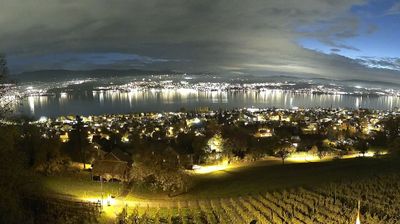




Among the towns of the canton of Zurich, Stäfa stands out for its long-established vineyards rising above Lake Zurich. The municipality occupies the lake’s eastern shore, where the lower slopes of the Pfannenstiel meet the water and vineyards share space with residential neighbourhoods and orchards. Wine-growing remains an important part of local identity, linking Stäfa with other lakeside communities shaped by the same fertile slopes. Stäfa also gave its name to the Stäfnerhandel of 1795, when local residents challenged the unequal political order of Zurich’s ancien régime. Place Stäfa within Lake Zurich’s eastern shore by browsing webcams nearby.
1 webcam
Built around a crossing on the Limmat River, Zurich grew into Switzerland’s largest city and one of Europe’s important financial centres. The city lies where the Limmat leaves Lake Zurich, with the wooded Uetliberg ridge rising to the west and the airport district extending northward. Its compact old town preserves lanes and guild houses on both banks of the river, while the Romanesque Grossmünster and the Fraumünster, renowned for stained-glass windows by Marc Chagall, mark the historic centre. Zurich’s museums, universities and lakeside promenades give the city a role that reaches well beyond banking. Explore additional webcams nearby to see how Zurich connects with Lake Zurich, the Limmat Valley and the Swiss Plateau.
69 webcams
Switzerland stretches from the Jura Mountains in the northwest to the Alps in the south, encompassing a central plateau of cities, farms and lakes. The Rhine rises in the Swiss Alps, while Lake Geneva forms part of the country’s southwestern border. Zürich, Geneva and Basel are major urban centres, yet mountain railways and passes remain central to how many regions are experienced. Four national languages—German, French, Italian and Romansh—reflect Switzerland’s distinct cantonal identities. The Matterhorn above Zermatt is among Europe’s most recognisable peaks, and the 1291 Federal Charter is closely associated with the country’s founding tradition. Continue through nearby webcams to explore different parts of Switzerland.
1.5K webcams