 Vagur
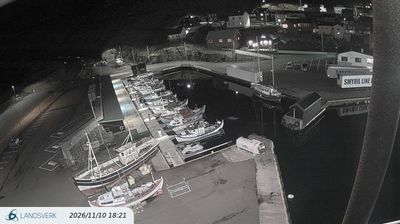
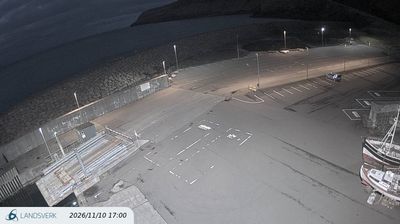
Built around its sheltered harbour on Vágsfjørður, Vágur grew into one of Suðuroy's principal fishing towns. The settlement extends along the eastern shore of the long fjord, with grassy slopes rising close behind its houses, quays and working harbour. Fishing and fish processing have long shaped local life, and the town remains an important service centre for southern Suðuroy. Vágur is also the birthplace of Ruth Smith, one of the Faroe Islands’ most respected 20th-century painters, whose work was closely connected with Faroese landscapes. On an island defined by steep coasts and scattered settlements, Vágur has a strongly maritime, lived-in character.
Generated by AI

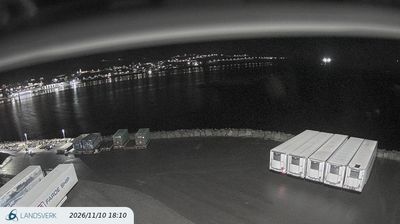

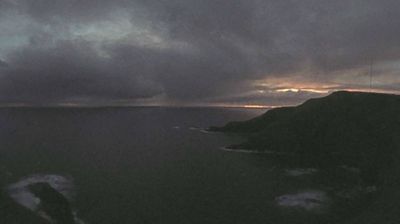
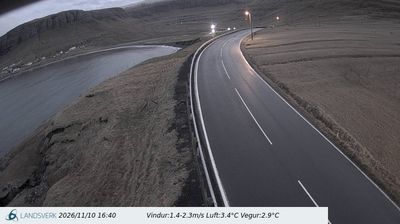


Deep fjords and steep, grass-covered slopes define much of the Suðuroy region - they have concentrated its communities, fishing activity and transport links along the coast. The southernmost of the Faroe Islands feels more open and less densely settled than the central islands, with Atlantic weather shaping daily life. Tvøroyri, beside Trongisvágsfjørður, is the island’s main service town, while nearby Krambatangi receives the Smyril ferry from Tórshavn. Westward, the sea cliff of Beinisvørð rises above the Atlantic, and Akraberg marks the archipelago’s southern end. Faroese remains the everyday language, and fishing continues to underpin local life. Find related webcams around Suðuroy to build a fuller picture of this southern Faroe Island.
8 webcams
Built around Norse settlements sustained by North Atlantic sea routes, the Faroe Islands developed into a self-governing archipelago within the Kingdom of Denmark. Eighteen rugged islands lie between Norway and Iceland, where steep basalt cliffs, grass-roofed houses and narrow fjords define the coast. The capital, Tórshavn, stands on Streymoy, while the sea stacks at Drangarnir and Lake Sørvágsvatn on Vágar reveal the islands’ striking geology. Faroese, descended from Old Norse, remains the everyday language, and the Løgting in Tórshavn is among the world’s oldest parliaments. Fishing and sheep farming continue to shape local life alongside a contemporary Nordic food and arts scene. Discover other points of interest through webcams located across the Faroe Islands.
50 webcams