 Le Havre: Les Gobelins: Le Havre - Hôtel de Ville
Few places in Normandy have a history as closely tied to post-war reconstruction as Le Havre. Devastated by Allied bombing in 1944, the city was rebuilt under architect Auguste Perret, whose rational grid, reinforced-concrete buildings and broad avenues form the UNESCO-listed centre, inscribed in 2005. The Église Saint-Joseph, completed in 1957, is its clearest landmark: its 107-metre lantern tower was designed as a memorial to the wartime dead. Le Havre stands on the English Channel beside the Seine estuary, with the seafront, harbour basins and port giving this Normandy city its distinctly maritime scale. The port, founded by Francis I in 1517, remains central to its identity.
Generated by AI


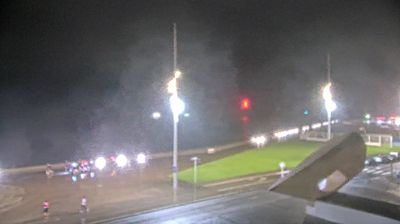



Among Normandy’s cities, Le Havre stands out for its post-war modernist centre, rebuilt under architect Auguste Perret after the destruction of 1944. Set on the English Channel beside the Seine estuary, it is home to one of France’s leading commercial ports and has long faced outward toward maritime trade. Perret’s ordered concrete architecture, including the landmark Saint-Joseph Church with its tall lantern tower, earned the city centre UNESCO World Heritage status in 2005. The MuMa André Malraux museum adds an important Impressionist collection to the waterfront cultural scene. Browse additional webcams from the Normandy coast to extend your view of the Seine estuary.
9 webcams
Among France’s regions, Normandy stands out for its Channel coast, fertile farmland and enduring links to medieval and modern European history. The English Channel frames a shoreline of broad beaches, cliffs and working ports, while the Seine crosses the eastern part of the region before reaching the sea near Le Havre. Rouen’s Gothic cathedral and the Bayeux Tapestry are major cultural reference points. Along the Calvados coast, the D-Day landing beaches recall the Allied landings of 1944. Normandy is also closely associated with cider, Camembert and dairy farming, traditions rooted in its green pastures. Move on to other webcams in the region to compare landscapes and settings around Normandy.
103 webcams
The Atlantic and Mediterranean coastlines, together with the Alps, Pyrenees and broad river basins, define much of France — they support maritime trade, farming, wine regions and travel throughout the year. The Seine runs through Paris, where the Eiffel Tower and the Louvre are among Europe’s most recognised landmarks. The Loire Valley is known for Renaissance châteaux, while Mont-Saint-Michel rises from a tidal bay in Normandy. Regional food traditions are equally distinctive, from Breton seafood to Provençal cooking, with bread, cheese and wine central to everyday life. France’s global cultural influence is evident in its language, literature, fashion and cinema. View additional webcams nearby to better understand how France’s coasts, plains and mountain borders relate to their surroundings.
2.2K webcams