 Bekescsaba: Belvaros: Békéscsaba -> Szarvas
Tucked into the broad flats of Hungary’s Great Plain, Békéscsaba is a city whose character is shaped by its lowland landscape and agricultural hinterland. The Élővíz Canal runs through the urban area, bringing a ribbon of water and greenery to a town otherwise defined by level streets and open horizons. Békéscsaba is the seat of Békés County and one of the principal centres of southeastern Hungary. Its Hungarian identity is closely interwoven with a long-established Slovak community, whose presence dates to resettlement in the 18th century. Food is another local marker: Csabai sausage is a protected Hungarian speciality, and the city hosts the Csabai Sausage Festival. This is a working regional centre where shops, services and busy roads meet the plain’s agricultural traditions.
Generated by AI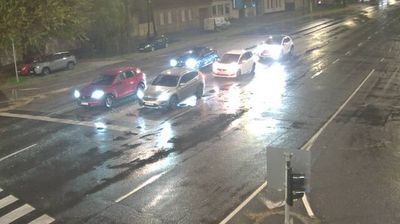




Békéscsaba has served as a centre of Slovak Lutheran settlement on Hungary’s Great Plain since the early 18th century. The city lies in the Körös region, where the Élővíz Canal passes through a broad lowland setting. Its Slovak community has left a lasting mark on local religious and cultural life, with the Evangelical Great Church among the city’s key landmarks. Békéscsaba is also associated with Csabai kolbász, a paprika-seasoned sausage celebrated each autumn at the Csabai Sausage Festival. The Munkácsy Mihály Museum recalls the painter’s connection with the city. Explore nearby webcam locations that provide complementary perspectives on Békéscsaba and the Körös region.
3 webcams
Built around the Tisza River basin and the trading routes of the Great Hungarian Plain, Great Plain and North developed into a broad region where open farmland meets Hungary’s northern hills. The Tisza and its floodplain have long influenced settlement and agriculture, while the plains retain the puszta character associated with horse breeding and herding. Hortobágy National Park, Hungary’s first national park and a UNESCO World Heritage site, safeguards a cultural landscape of grassland, wetlands and traditional pastoral use. Farther north, the terrain rises toward the country’s mountain districts. Continue with other webcams from the area to see how this part of Hungary connects between the plain and northern uplands.
274 webcams
Hungary combines a long urban tradition with expansive lowland horizons in a way that reflects its position within the Carpathian Basin. The Danube runs through Budapest, separating the hills of Buda from the grand boulevards of Pest, where the Hungarian Parliament Building stands on the riverbank. Beyond the capital, the Great Hungarian Plain shapes much of the east, while Lake Balaton, Central Europe’s largest lake, draws summer visitors to its shores. Thermal bathing remains part of everyday life, and the Tokaj region is internationally known for its historic sweet wines. Explore nearby webcam locations that provide complementary perspectives on Hungary.
744 webcams