 Soyons
Guilherand-Granges combines a low-rise Rhône-bank townscape with the traffic intensity of a Valence approach in a way that reflects its geographic position. On the Ardèche side of the Rhône, the commune faces Valence and forms part of its continuous urban area, while the D86 provides a major north–south route through the valley. The setting shifts quickly from roadside businesses and residential quarters to the slopes above Saint-Péray, where the ruins of the medieval Château de Crussol stand on a limestone ridge. That contrast shapes the town’s character: practical and connected at river level, with the foothills of the Massif Central close at hand. Local life is tied to Valence’s services and employment, yet Guilherand-Granges retains its own Ardèche identity across the river.
Generated by AI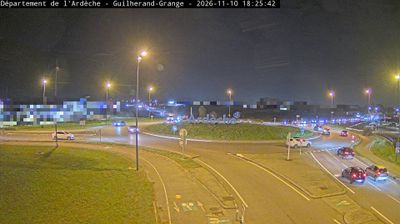
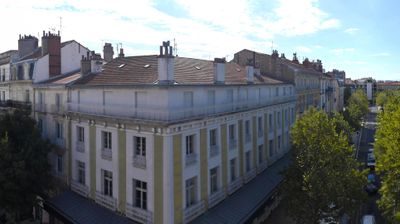
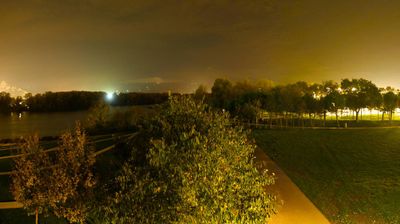

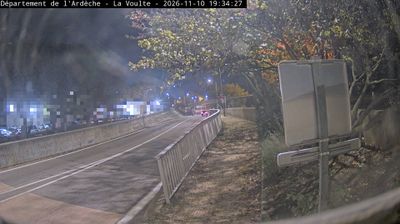


The landscape around Soyons is a Rhône-side plain beneath limestone slopes, which has shaped both its settlement pattern and local farming. On the river’s right bank near Valence, the commune belongs to the northern Rhône valley, a long-established route between inland France and the Mediterranean. Soyons is known for its prehistoric and Gallo-Roman heritage: hillside caves, including the Grotte de Néron, and archaeological sites record occupation across many millennia. The Archaeological Museum of Soyons presents finds from this exceptional local sequence. Browse additional webcams from the surrounding area to extend your view of Ardèche.
1 webcam
Auvergne-Rhône-Alpes is widely known in France for the French Alps, the major mountain chain along its eastern edge. This vast administrative region also extends west across the Massif Central and follows the Rhône valley, bringing together volcanic uplands, river corridors and major cities. Lyon, the regional capital, stands between the Rhône and Saône, and its historic centre is inscribed on UNESCO’s World Heritage List. Near these coordinates, northern Ardèche lies close to the wooded hills of the Pilat area, where the Rhône corridor forms a transition between upland country and valley settlements. Alpine cheeses and Rhône valley wines reflect the region’s varied terrain. Browse additional webcams from the surrounding area to extend your view of Auvergne-Rhône-Alpes.
768 webcams
The Atlantic and Mediterranean coastlines, together with the Alps, Pyrenees and broad river basins, define much of France — they support maritime trade, farming, wine regions and travel throughout the year. The Seine runs through Paris, where the Eiffel Tower and the Louvre are among Europe’s most recognised landmarks. The Loire Valley is known for Renaissance châteaux, while Mont-Saint-Michel rises from a tidal bay in Normandy. Regional food traditions are equally distinctive, from Breton seafood to Provençal cooking, with bread, cheese and wine central to everyday life. France’s global cultural influence is evident in its language, literature, fashion and cinema. View additional webcams nearby to better understand how France’s coasts, plains and mountain borders relate to their surroundings.
2.2K webcams