 Barnaul
Few places in Altai Krai have a history as closely tied to silver smelting as Barnaul. Founded in the 18th century around works established by the industrialist Akinfiy Demidov, it developed into an important administrative and commercial centre of southwestern Siberia. The city stands on the left bank of the Ob, one of Russia’s great rivers, at the edge of the West Siberian Plain. Barnaul’s built fabric ranges from surviving merchant-era buildings and Orthodox churches to Soviet neighbourhoods and newer apartment towers. Its theatres, museums and universities make it the region’s principal urban centre, while its river setting links the city to the wider landscapes of Altai Krai.
Generated by AI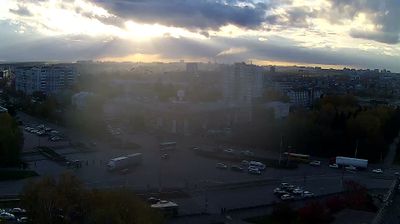
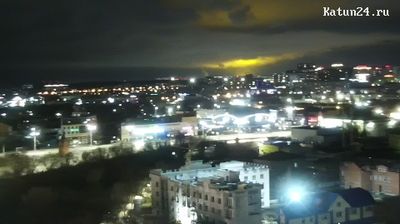


Among the cities of Altai Krai, Barnaul stands out for its position where the Barnaulka meets the great Ob River. The regional capital is one of the principal urban centres of southwestern Siberia, with broad riverbanks and a lowland setting that contrasts with the Altai Mountains farther south. Barnaul developed in the 18th century around mining and smelting works established by the industrialist Akinfiy Demidov, an origin reflected in the city’s long association with Altai’s mineral resources. Today it remains the administrative, educational and cultural centre of Altai Krai, while the Ob links it to the larger Siberian river network. View additional webcams nearby to better understand how Barnaul and Altai Krai relate to the surrounding Siberian landscape.
4 webcams
Altai Krai has served as an agricultural heartland within southern Siberia since the early twentieth century. Its wide territory spans the Kulunda Plain, forest-steppe country and the northern foothills of the Altai Mountains, where landscapes become more varied toward the southeast. The Ob River is a defining waterway, flowing through the regional capital, Barnaul. Grain cultivation and livestock farming remain central to the local economy. Barnaul developed around eighteenth-century silver-smelting works, linking the region to Siberia’s early imperial industry. Browse other webcams across Altai Krai to place this setting in a wider geographic context.
10 webcams
Russia has served as a major power between Europe and Asia since the 16th century. Its territory crosses eleven time zones, extending from the Baltic coast and the East European Plain over the Ural Mountains to the Pacific. The Volga, Europe’s longest river, runs through a core of historic Russian settlement, while Lake Baikal in Siberia is the world’s deepest lake. Moscow’s Kremlin and Red Square stand at the centre of the capital’s political and architectural heritage; Saint Petersburg’s Hermitage Museum occupies the Winter Palace. Orthodox churches, Russian-language literature, ballet and long-distance rail travel remain familiar reference points in a country of immense regional contrasts. Continue with other webcams from Russia to see how this part of northern Eurasia connects regionally.
468 webcams