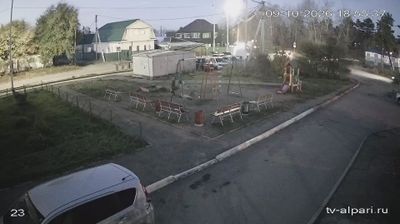
 Шелеховское городское поселение: 11-й квартал: 11квартал 4дом во двор, кам 2
Among the towns of Irkutsk Oblast, Shelekhov stands out for its origins as a Soviet industrial centre beside the Olkha River. It was founded in 1953 as a settlement for builders of the Irkutsk Aluminium Smelter and gained city status in 1962. The name honours Grigory Shelikhov, an eighteenth-century Russian merchant and explorer associated with early Russian activity in Alaska. Shelekhov lies southwest of Irkutsk in a settled corridor of southern Siberia, near the Olkha’s confluence with the Irkut River. Broad residential districts, courtyards and civic spaces reflect the planned character of an industrial city, while proximity to Irkutsk ties it closely to the region’s main urban centre.
Generated by AI

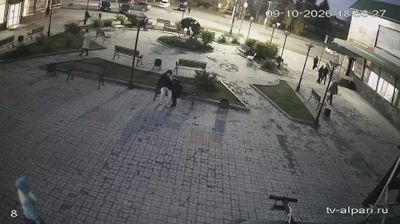
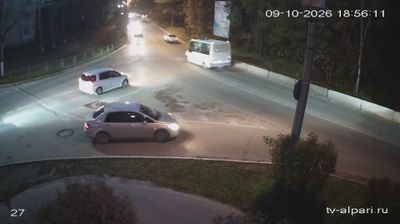
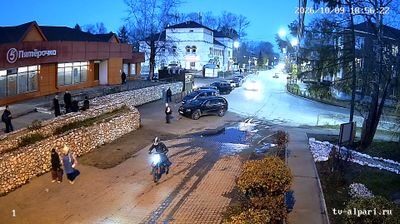

Among the cities of Irkutsk Oblast, Shelekhov stands out for its close association with aluminium production and its position on the Olkha River, southwest of Irkutsk. The town developed in the 1950s alongside the Irkutsk Aluminium Smelter and received city status in 1962; it is named after the Russian merchant and explorer Grigory Shelikhov. Rail links place Shelekhov on the route toward Lake Baikal, while its wider setting belongs to the upper Angara basin and the approaches to the Eastern Sayan. It provides a useful perspective on the industrial belt around Irkutsk. View additional webcams nearby to better understand how Shelekhov relates to the Angara basin and the Eastern Sayan approaches.
31 webcams
Irkutsk Oblast has served as an administrative heartland of eastern Siberia within Russia since 1937. It extends from the Central Siberian Plateau to Lake Baikal, whose western shore lies in the oblast and forms part of a UNESCO World Heritage site. The Angara River, the only river flowing out of Baikal, runs north through Irkutsk before continuing towards the Yenisei. Irkutsk, the regional capital, developed as a major Siberian trading and administrative centre and retains notable wooden architecture alongside its nineteenth-century stone buildings. The Trans-Siberian Railway also links the region to Russia’s wider rail network. Browse additional webcams from the surrounding area to extend your view of Irkutsk Oblast.
46 webcams
Russia has served as a major power between Europe and Asia since the 16th century. Its territory crosses eleven time zones, extending from the Baltic coast and the East European Plain over the Ural Mountains to the Pacific. The Volga, Europe’s longest river, runs through a core of historic Russian settlement, while Lake Baikal in Siberia is the world’s deepest lake. Moscow’s Kremlin and Red Square stand at the centre of the capital’s political and architectural heritage; Saint Petersburg’s Hermitage Museum occupies the Winter Palace. Orthodox churches, Russian-language literature, ballet and long-distance rail travel remain familiar reference points in a country of immense regional contrasts. Continue with other webcams from Russia to see how this part of northern Eurasia connects regionally.
457 webcams