 Montbeliard: Le Pied des Gouttes: Environs de Montbéliard
Among the places of Bourgogne–Franche-Comté, Montbéliard stands out for its enduring Württemberg heritage. The town developed around the Château de Montbéliard, residence of the counts of Württemberg-Montbéliard for centuries; it became French only in 1793. Montbéliard lies on the Allan, close to its confluence with the Doubs. Its historic centre, marked by the castle and Saint-Martin church, contrasts with the industrial identity of the wider Pays de Montbéliard, strongly associated with the Peugeot automobile works at nearby Sochaux. Broad road corridors, business sites and open farmland meet around the town, reflecting a landscape shaped by both manufacturing and the river plain.
Generated by AI

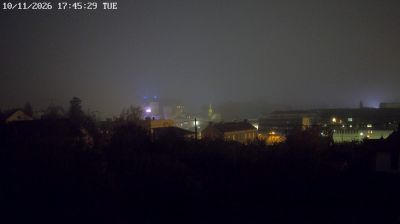





Tucked between the Allan and Lizaine rivers in northern Franche-Comté, Montbéliard is a place whose character is shaped by its borderland past and industrial surroundings. The Château des Ducs de Wurtemberg, standing above the old centre, recalls the centuries when the town belonged to the County of Württemberg; that connection also established a lasting Lutheran tradition. Colourful façades around Place Saint-Martin and the Temple Saint-Martin give the centre a character distinct from many French towns. Montbéliard is also closely tied to the Peugeot story: the company developed in the nearby Pays de Montbéliard, where manufacturing remains a major part of local identity. Each winter, its Lumières de Noël celebrations animate the streets and market squares. Browse additional webcams from the surrounding area to extend your view of the Pays de Montbéliard.
2 webcams
Bourgogne–Franche-Comté is best known within France for Burgundy’s climats, a UNESCO-listed mosaic of vineyard parcels and winegrowing settlements. The region joins the historic Burgundy wine country around Dijon and Beaune with Franche-Comté, where the Jura Mountains run along the Swiss border. The Saône crosses its western lowlands, while the Doubs shapes valleys farther east. Dijon’s Palace of the Dukes and Estates of Burgundy recalls the capital’s ducal past; in the Jura, Comté cheese is made under a protected designation of origin. Vineyards, stone towns, forests and mountain pastures give this large eastern region a distinctly varied identity. Discover other points of interest through webcams located across Bourgogne–Franche-Comté.
91 webcams
The Atlantic and Mediterranean coastlines, together with the Alps, Pyrenees and broad river basins, define much of France — they support maritime trade, farming, wine regions and travel throughout the year. The Seine runs through Paris, where the Eiffel Tower and the Louvre are among Europe’s most recognised landmarks. The Loire Valley is known for Renaissance châteaux, while Mont-Saint-Michel rises from a tidal bay in Normandy. Regional food traditions are equally distinctive, from Breton seafood to Provençal cooking, with bread, cheese and wine central to everyday life. France’s global cultural influence is evident in its language, literature, fashion and cinema. View additional webcams nearby to better understand how France’s coasts, plains and mountain borders relate to their surroundings.
2.2K webcams