 Frauenberg
 is best known in France’s Moselle department for the Sarreguemines–Neunkirch aerodrome, a small general-aviation field beside the German border. The commune lies in the Sarre valley, where open farmland and wooded edges form part of the wider Lorraine–Saarland borderland. Light-aircraft activity gives the aerodrome a practical local role, while the surrounding settlement remains distinctly rural. Above the village, the ruins of Château de Frauenberg recall the medieval frontier that shaped this part of Lorraine. Nearby Sarreguemines, on the Sarre, is historically associated with ceramics, a craft central to the town’s identity.
Generated by AI
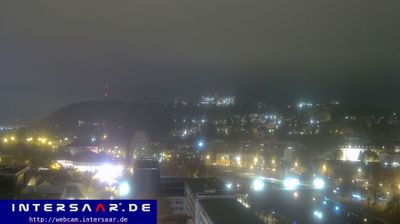

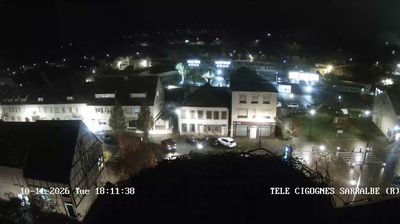

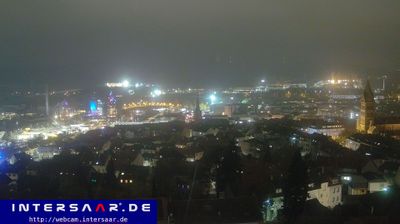


Frauenberg stands in the Saar valley in France’s Grand Est region, where the Moselle département meets the German border. This small commune lies northeast of Sarreguemines, in a borderland shaped by the river corridor between Lorraine and Saarland. The ruins of Château de Frauenberg recall the site’s medieval fortified past and remain the village’s principal historic landmark. Frauenberg belongs to the Sarreguemines Confluences area, linking communities around the meeting of the Saar and Blies rivers. Discover other points of interest through webcams located across Frauenberg and the Moselle department.
1 webcam
Grand Est is best known in France for the Champagne vineyards that sustain one of the country’s most celebrated wine traditions. Extending from the Ardennes to Alsace on the German border, this large eastern region unites the historic territories of Alsace, Champagne-Ardenne and Lorraine. The Moselle runs through Lorraine, while the Rhine shapes much of the eastern frontier. Strasbourg, the regional capital, is home to the European Parliament and its celebrated Gothic cathedral; nearby Nancy is distinguished by the UNESCO-listed Place Stanislas. Continue through nearby webcams to explore different parts of Grand Est.
109 webcams
The Atlantic and Mediterranean coastlines, together with the Alps, Pyrenees and broad river basins, define much of France — they support maritime trade, farming, wine regions and travel throughout the year. The Seine runs through Paris, where the Eiffel Tower and the Louvre are among Europe’s most recognised landmarks. The Loire Valley is known for Renaissance châteaux, while Mont-Saint-Michel rises from a tidal bay in Normandy. Regional food traditions are equally distinctive, from Breton seafood to Provençal cooking, with bread, cheese and wine central to everyday life. France’s global cultural influence is evident in its language, literature, fashion and cinema. View additional webcams nearby to better understand how France’s coasts, plains and mountain borders relate to their surroundings.
2.2K webcams