 Krnov
Krnov combines a compact urban centre with a largely wooded setting in a way that reflects its position at the confluence of the Opava and Opavice rivers, below the Nízký Jeseník foothills. The town stands in Czech Silesia near the Polish border, where the river valley opens toward the Opava lowland. Krnov developed as the seat of the historic Duchy of Krnov and later became an important textile-industry centre; its streets still carry the imprint of that industrial expansion. Residential districts meet wooded slopes and open land beyond the centre, keeping the town closely connected to its surrounding terrain rather than forming an uninterrupted urban spread.
Generated by AI

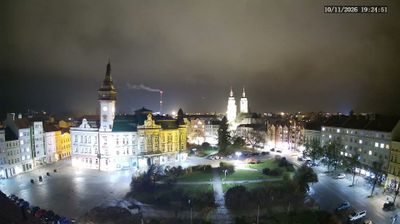


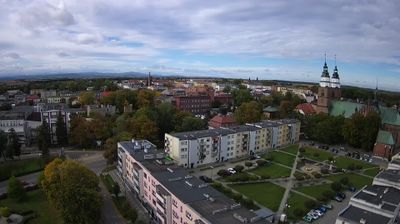




Krnov is best known in Czechia for its long-established tradition of organ building. The town stands at the confluence of the Opava and Opavice rivers, below the wooded slopes of the Nízký Jeseník foothills in the north-east of the country. Its compact historic centre includes the town hall and the Church of St Martin, while Cvilín Hill rises above Krnov with its Baroque pilgrimage church dedicated to Our Lady of Seven Sorrows and the Exaltation of the Holy Cross. The local organ-making heritage remains an important part of Krnov’s industrial and cultural identity. Explore nearby locations that provide complementary perspectives on Krnov and the Opava River valley.
7 webcams
Moravian-Silesian Region combines an industrial legacy with mountain terrain in a way that reflects its position between the historic lands of Moravia and Silesia on Czechia’s northeastern frontier. Ostrava, its largest city, developed around coal mining and ironmaking; the former Vítkovice ironworks, now the Dolní Vítkovice cultural complex, remain a defining reminder of that era. Beyond the urban basin, the Beskydy range rises in the southeast, while the Oder has its source in the Oderské vrchy. Opava adds another thread of Silesian identity through its historic centre and cultural life. Browse additional webcams from the surrounding area to extend your view of the Moravian-Silesian Region.
119 webcams
The terrain of Czechia ranges from fertile lowlands in southern Moravia to mountain ridges along the northern frontier, giving this Central European country a distinctly varied geography. The Vltava runs through Prague before joining the Elbe, while the Krkonoše form part of the border with Poland and include Sněžka, Czechia’s highest mountain. Prague’s historic centre, with Prague Castle and Charles Bridge, reflects the city’s long role as a political and cultural centre. Beyond the capital, Bohemia is known for spa towns and brewing, and Moravia for wine-growing traditions. View additional webcams nearby to better understand how Czechia relates to its Central European surroundings.
1.4K webcams