 Val-de-Travers
 has served as a centre of absinthe production in the canton of Neuchâtel since the late 18th century. This Jura valley lies west of Lake Neuchâtel, with forested ridges and upland pastures rising above its settlements. Crêt-aux-Moines belongs to this higher rural terrain, where grazing land is divided by fences and edged by woodland. Val-de-Travers is closely associated with the celebrated green spirit: its production was prohibited in Switzerland from 1910 until 2005, and local distilleries now continue the tradition. Couvet, one of the valley’s principal villages, stands beside the Areuse, which crosses Val-de-Travers before reaching Lake Neuchâtel. The area brings together working Jura farmland and a long craft-distilling identity.
Generated by AI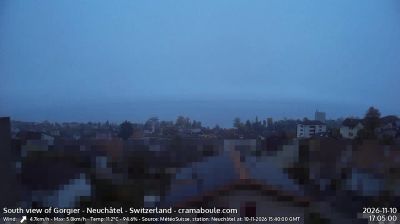
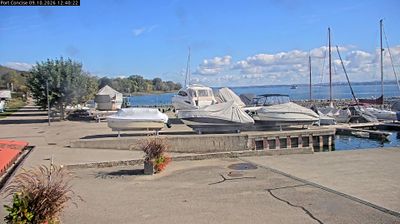
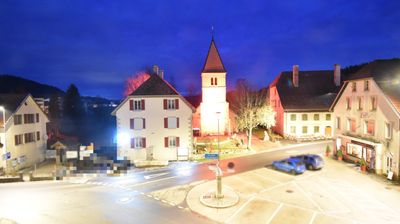

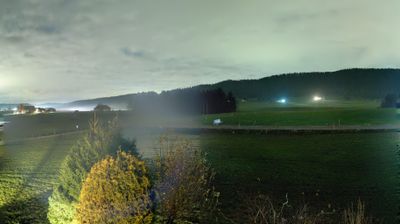
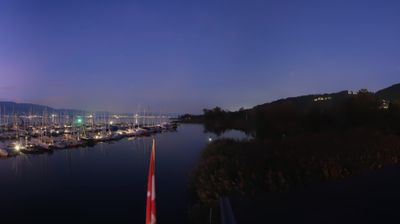


Val-de-Travers has served as an absinthe-producing valley in the canton of Neuchâtel since the 18th century. The Areuse rises at Saint-Sulpice and runs through this folded Jura valley, linking its villages before continuing towards Lake Neuchâtel. Near Noiraigue, the limestone amphitheatre of Creux du Van is among the Jura’s best-known geological formations. Absinthe remains central to local identity, with distilleries using wormwood, anise and fennel after Switzerland ended its national ban in 2005. The former asphalt mines at La Presta recall another industry that shaped the valley. View additional webcams nearby to better understand how Val-de-Travers relates to the Jura and Lake Neuchâtel.
2 webcams
Among the regions of Switzerland, Neuchâtel stands out for its Jura watchmaking heritage and terrain that runs from high valleys to the shores of Lake Neuchâtel. The canton lies in western Switzerland, where folded Jura ridges frame forests, pastures and towns shaped by precision crafts. La Chaux-de-Fonds and Le Locle are jointly listed by UNESCO for their urban planning, designed around the needs of the watch industry. Neuchâtel, the cantonal capital, stands beside the lake and retains a medieval castle and collegiate church. View additional webcams nearby to better understand how Neuchâtel relates to the Swiss Jura and Lake Neuchâtel.
18 webcams
Switzerland stretches from the Jura Mountains in the northwest to the Alps in the south, encompassing a central plateau of cities, farms and lakes. The Rhine rises in the Swiss Alps, while Lake Geneva forms part of the country’s southwestern border. Zürich, Geneva and Basel are major urban centres, yet mountain railways and passes remain central to how many regions are experienced. Four national languages—German, French, Italian and Romansh—reflect Switzerland’s distinct cantonal identities. The Matterhorn above Zermatt is among Europe’s most recognisable peaks, and the 1291 Federal Charter is closely associated with the country’s founding tradition. Continue through nearby webcams to explore different parts of Switzerland.
1.5K webcams