 Trier: Blandine-Merten-Realschule Trier
Blandine-Merten-Realschule Trier occupies a built-up slope above the Moselle valley in Rhineland-Palatinate. It stands in Trier-Süd, south of the centre, where residential streets, school grounds and mature trees meet the compact fabric of one of Germany’s oldest cities. The Moselle flows through Trier before continuing towards Luxembourg and France, while low wooded hills frame much of the urban area. Trier began as the Roman city of Augusta Treverorum, and monuments including the Porta Nigra and the Imperial Baths form part of its UNESCO-listed Roman heritage.
Generated by AI


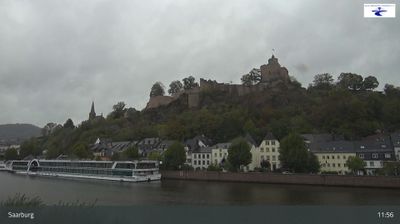
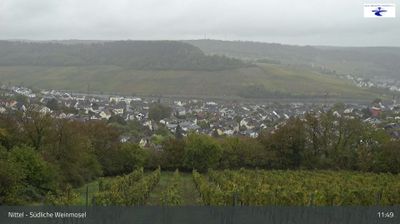


Built around a crossing of the Moselle, Trier grew into one of Germany’s oldest cities. Founded by the Romans as Augusta Treverorum, it became an imperial residence in the late Roman Empire, leaving an exceptional group of monuments now recognised by UNESCO. The Porta Nigra, a vast Roman city gate, remains its defining survivor, while the Aula Palatina was built as Constantine’s imperial audience hall. Trier Cathedral, with origins in late antiquity, adds another layer to the compact historic centre. The Moselle valley also connects the city with Rhineland-Palatinate’s wine-growing country. Discover how Trier belongs to the wider Moselle Valley by browsing nearby webcams.
1 webcam
The Rhine and Moselle define much of Rhineland-Palatinate – their valleys have long concentrated vineyards, river transport and historic towns. Inland, the wooded Hunsrück plateau contrasts with the vine-covered slopes of the Moselle, Nahe and Mittelrhein wine areas. Trier preserves the Porta Nigra, a Roman city gate within the UNESCO-listed Roman Monuments of Trier. The state also includes part of the UNESCO-listed Upper Middle Rhine Valley, where castles, terraces and riverside settlements shape a celebrated cultural landscape. Wine festivals and the autumn harvest remain central to local life. Browse other webcams across Rhineland-Palatinate to place this setting in a wider geographic context.
123 webcams
Germany stretches from the North Sea and Baltic Sea coasts to the Alps on its southern border, encompassing northern plains, river valleys and forested uplands. The Rhine, Danube and Elbe have long connected its regions, while the Black Forest and Bavarian Alps give the south a more dramatic relief. Berlin’s Brandenburg Gate and Museum Island reflect the capital’s role in German history and culture. Cologne Cathedral, a UNESCO World Heritage Site, rises above the Rhine, and the Bauhaus movement, founded in Weimar in 1919, transformed modern design far beyond Germany. Regional cooking, Christmas markets and brewing traditions bring further character to daily life. Browse additional webcams from the surrounding area to extend your view of Germany.
2.8K webcams