 Garafia: Mercator Telescope
The landscape around Roque de los Muchachos Observatory is a rugged volcanic highland above the Atlantic, which has shaped both the built environment and local life. On La Palma’s northern heights, the observatory stands along the rim of the Caldera de Taburiente, in terrain formed by the island’s volcanic origins. Named for the 16th-century Flemish cartographer Gerardus Mercator, the Mercator Telescope is a 1.2-metre optical instrument operated by Belgium’s KU Leuven. It belongs to an international research complex whose domes punctuate this remote ridge. Below, the municipality of Garafía is among La Palma’s least densely settled areas, with homes and small hamlets distributed across steep slopes. Astronomy gives this corner of the Canary Islands an important scientific role.
Generated by AI
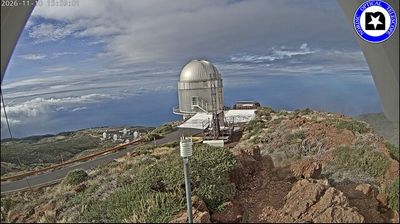

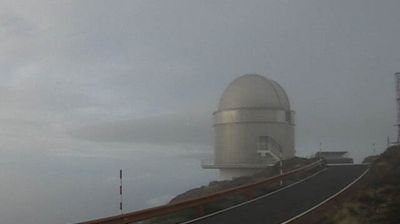
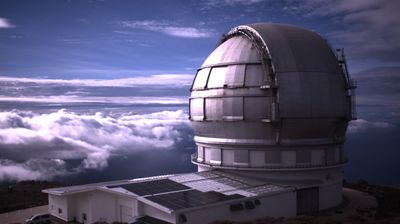
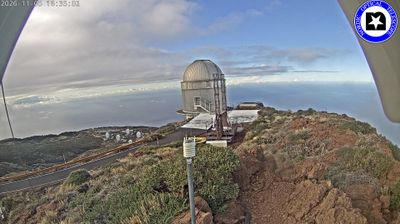
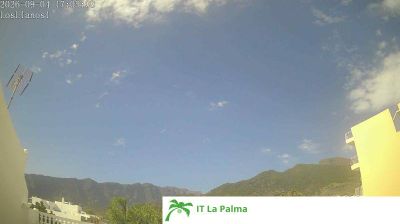

Tucked along La Palma’s rugged northwestern Atlantic coast, Garafía is a municipality whose character is shaped by steep volcanic slopes and deep ravines. Its scattered hamlets and cultivated terraces occupy a sparsely settled part of the island, where the land rises from the ocean towards the high ridges around Roque de los Muchachos. The Roque de los Muchachos Observatory is among the world’s leading astronomical sites, benefiting from clear skies and the altitude of La Palma’s summit. Garafía also preserves an older island heritage at La Zarza and La Zarcita Archaeological Park, known for rock engravings made by the Benahoarite people. Explore nearby webcam locations that provide complementary perspectives on La Palma’s Atlantic coast and volcanic highlands.
6 webcams
The Canary Islands have served as an Atlantic crossroads within Spain since the fifteenth century. This volcanic archipelago lies off northwestern Africa, where the Atlantic Ocean, trade winds and sharply varying terrain shape climates ranging from dry coasts to cool uplands. Tenerife is home to Mount Teide, Spain’s highest peak, while the Teide National Park is a UNESCO World Heritage Site. Across the islands, black-sand shores, lava fields and cultivated slopes reflect their volcanic origins. Carnival traditions, especially those of Santa Cruz de Tenerife, remain an important part of the local calendar. View additional webcams nearby to better understand how the Canary Islands relate to the Atlantic and to one another.
73 webcams
Spain extends from the Cantabrian coast to the Canary Islands, encompassing Atlantic shores, Mediterranean beaches and the broad interior Meseta. The Pyrenees form its northeastern frontier, while the Guadalquivir crosses Andalusia on its way to the Atlantic. Madrid anchors the country’s political and cultural life, but distinct regional identities are central to Spain’s character: Catalonia, the Basque Country, Galicia and Andalusia each have their own languages or strong local traditions. Granada’s Alhambra is a major monument of the medieval Nasrid dynasty, and Santiago de Compostela remains the destination of the Camino de Santiago. Browse related webcams around the Iberian Peninsula to build a fuller picture of Spain.
1.4K webcams