 Braunlage
Wurmberg stands on a ridge above Braunlage in the Harz of Lower Saxony, a position that has made it a focal point for mountain recreation in northern Germany. At 971 metres, it is Lower Saxony’s highest mountain. Broad ski runs and the Wurmbergseilbahn gondola link its upper slopes with Braunlage, while hiking and mountain-bike routes extend beyond the lift infrastructure. The summit’s Wurmberg Tower is an observation tower, and the ridge lies close to the former inner-German border, an important strand in the Harz’s 20th-century history. Braunlage developed as a health and winter-sports resort amid the wooded Harz highlands.
Generated by AI
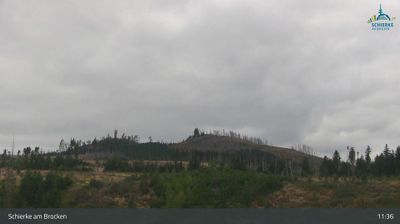
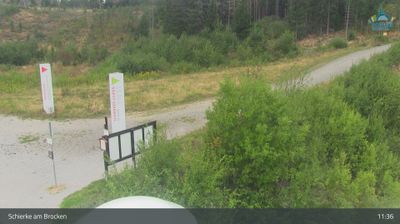
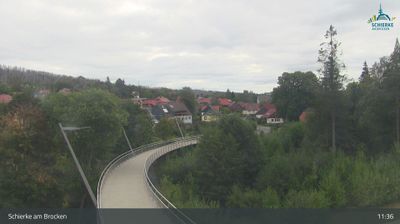
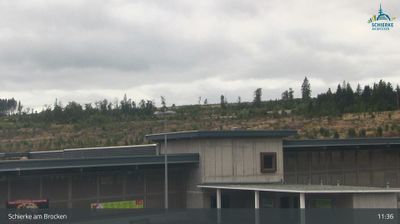
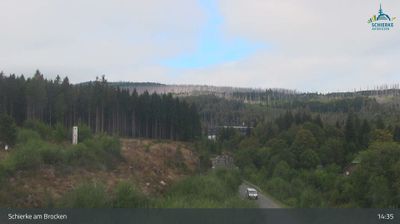
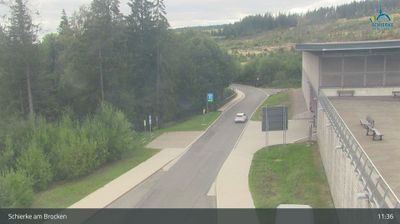

Braunlage lies along the Warm Bode in Lower Saxony’s Harz Mountains, and its position below the Wurmberg has shaped it into one of the region’s principal mountain-sports towns. At 971 metres, the Wurmberg is Lower Saxony’s highest peak; its slopes support walking and cycling in warmer months and winter-sports facilities when conditions allow. The Wurmberg cable car links Braunlage with the summit area, while the town centre provides a practical base of hotels, restaurants and shops. The surrounding Harz range has long been associated with mining and mountain travel. Find related webcams in the surrounding Harz Mountains to build a fuller picture of Braunlage and Lower Saxony.
6 webcams
Lower Saxony extends from the North Sea coast to the Harz Mountains, encompassing Wadden Sea mudflats, broad lowlands and wooded uplands. At its northern edge, the Lower Saxon Wadden Sea forms part of the UNESCO-listed Wadden Sea, shaped twice daily by the tides. The Weser crosses the state on its way to the North Sea, while the Elbe marks much of its northeastern border. Inland, the Lüneburg Heath is associated with heather moorland and long-standing sheep farming. Hanover, the state capital, is known for the Herrenhausen Gardens, whose Great Garden is a major baroque ensemble. Explore further webcams across Lower Saxony to place the region in its wider geographic context.
198 webcams
Germany stretches from the North Sea and Baltic Sea coasts to the Alps on its southern border, encompassing northern plains, river valleys and forested uplands. The Rhine, Danube and Elbe have long connected its regions, while the Black Forest and Bavarian Alps give the south a more dramatic relief. Berlin’s Brandenburg Gate and Museum Island reflect the capital’s role in German history and culture. Cologne Cathedral, a UNESCO World Heritage Site, rises above the Rhine, and the Bauhaus movement, founded in Weimar in 1919, transformed modern design far beyond Germany. Regional cooking, Christmas markets and brewing traditions bring further character to daily life. Browse additional webcams from the surrounding area to extend your view of Germany.
2.7K webcams