 Scharnstein
 occupies the broad Almtal valley in Upper Austria. The River Alm runs north through the settlement, set among cultivated slopes, scattered farmsteads and forested foothills; the valley continues south towards the Totes Gebirge. Scharnstein lies on the eastern edge of the Salzkammergut, where rural land use and small industrial communities developed along the watercourses. Its long association with ironworking is documented by the Austrian Scythe Museum at Geyerhammer, a former scythe-forge complex. Meadows and wooded ridges surround the built-up centre, while the limestone mountain country of the Northern Alps gives the wider Almtal its distinct scale.
Generated by AI
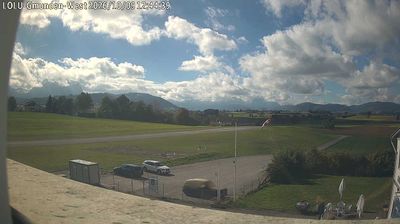
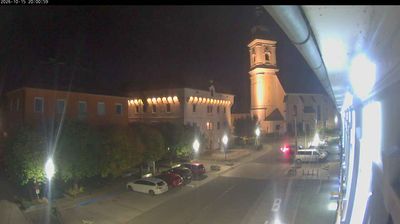
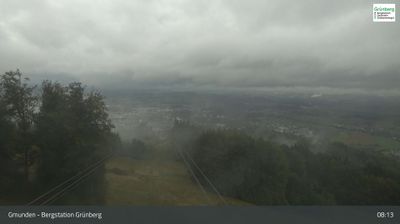
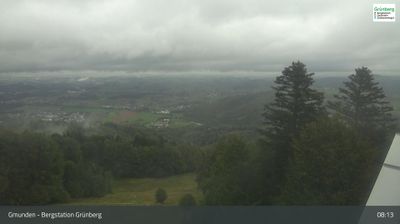



Scharnstein is best known in Upper Austria for the Austrian Scythe Museum at Geyerhammer, which documents the craft and industry that once shaped the Almtal. The market town lies on the Alm, in a valley that leads south from the Traunsee area toward the limestone ranges of the Northern Alps. Above the settlement, the ruins of Scharnstein Castle recall its medieval past, while Geyerhammer preserves the setting of a former scythe works. The Almtalbahn links Scharnstein with Wels to the north and Grünau im Almtal farther south. Browse additional webcams from the surrounding area to extend your view of the Almtal.
2 webcams
Formed around the Danube and Enns corridors, Upper Austria developed into one of Austria’s nine federal states. Linz, its capital on the Danube, combines a major industrial tradition with cultural institutions including the Ars Electronica Center. North of the river, the Mühlviertel rolls towards the Czech border; southward, the terrain rises into the Alpine foothills and the lake country of the Salzkammergut. Hallstatt, beside Hallstätter See, is among the region’s best-known historic settlements and lends its name to the Hallstatt period of early Iron Age Europe. Browse additional webcams from the surrounding area to extend your view of Upper Austria.
378 webcams
Austria stretches from the Bohemian Massif along its northern edge to the Carnic Alps on the Italian border, encompassing high Alpine ranges and the Danube lowlands. The Danube links cities including Linz and Vienna, while the Grossglockner, at 3,798 metres, is the country’s highest mountain. Vienna developed for centuries as the seat of the Habsburg court, leaving imperial architecture around the Hofburg and Schönbrunn Palace. Salzburg is closely associated with Wolfgang Amadeus Mozart, who was born there in 1756. Alpine Tyrol, wine-growing areas east of Vienna and the lakes of Salzkammergut add markedly different regional identities. Browse other webcams across Austria to place this setting in a wider geographic context.
3.1K webcams