 Narbonne
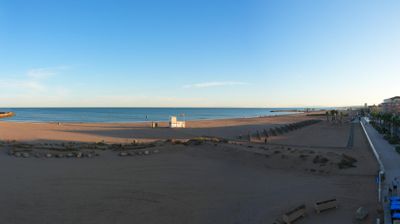
-Plage occupies a sandy coastal strip between the Mediterranean Sea and the Massif de la Clape in Occitanie. This seaside quarter of Narbonne faces the Gulf of Lion, with a marina and long beach shaping its modern identity. Inland, the limestone hills of La Clape form part of the Narbonnaise en Méditerranée Regional Natural Park, where garrigue vegetation and vineyards define the terrain. Narbonne itself began as the Roman colony of Narbo Martius in 118 BC and retains reminders of its place on the Via Domitia, including a preserved section of Roman road at Place de l’Hôtel de Ville. The coast brings a distinctly Mediterranean dimension to this ancient city.
Generated by AI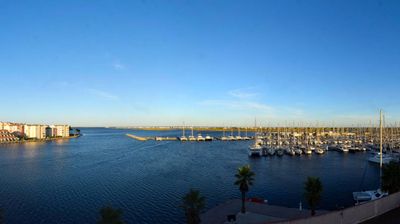
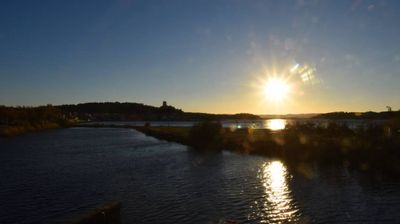


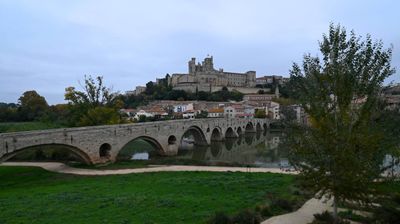

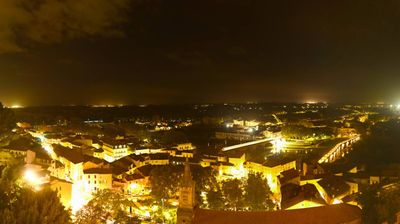


The Canal de la Robine defines the setting of Narbonne — its tree-lined course runs through the old centre, giving the former Roman port a waterside rhythm of quays, bridges and café terraces. Founded as Narbo Martius in 118 BC, the city stood on the Via Domitia, Rome’s route through southern Gaul; a preserved section of the road lies beside the Archbishop’s Palace. That palace and the unfinished Gothic Cathedral of Saint-Just-et-Saint-Pasteur dominate the historic core, while Les Halles covered market remains central to local food culture. Beyond town, the canal continues toward coastal lagoons and the Mediterranean, with the Corbières hills rising to the west. Discover other points of interest through webcams located across Narbonne and Occitanie.
1 webcam
Occitania occupies a broad southern belt in France, extending from the Massif Central and the Pyrenees to the Mediterranean coast. These coordinates lie in the inland Haut-Languedoc area, where wooded hills and reservoirs around the upper Agout contrast with coastal plains farther east. Toulouse, the regional capital, stands on the Garonne and is associated with the Canal du Midi, a 17th-century waterway linking the city with the Mediterranean and listed as a UNESCO World Heritage Site since 1996. Roman sites, fortresses connected with the Cathar past, and the Occitan language tradition reveal the many layers of southern French identity. Continue through nearby webcams to explore different parts of Occitania.
214 webcams
The Atlantic and Mediterranean coastlines, together with the Alps, Pyrenees and broad river basins, define much of France — they support maritime trade, farming, wine regions and travel throughout the year. The Seine runs through Paris, where the Eiffel Tower and the Louvre are among Europe’s most recognised landmarks. The Loire Valley is known for Renaissance châteaux, while Mont-Saint-Michel rises from a tidal bay in Normandy. Regional food traditions are equally distinctive, from Breton seafood to Provençal cooking, with bread, cheese and wine central to everyday life. France’s global cultural influence is evident in its language, literature, fashion and cinema. View additional webcams nearby to better understand how France’s coasts, plains and mountain borders relate to their surroundings.
2.2K webcams