 Lindenberg im Allgau
Lindenberg im Allgäu lies along the rolling uplands of the Westallgäu, where a compact townscape of steep-roofed houses spreads across terrain north of the Alps. The town belongs to Bavaria’s Allgäu region, between Lake Constance and the Alpine foothills, and developed from a rural settlement into an important centre of hat making. That trade is recalled by the Deutsches Hutmuseum, housed in a former hat factory and devoted to the craft, fashion and industry behind headwear. The parish church of St Peter and Paul, with its twin towers, is a prominent feature of the centre. Lindenberg’s streets combine older homes, shops and civic buildings with the practical services of a regional small town.
Generated by AI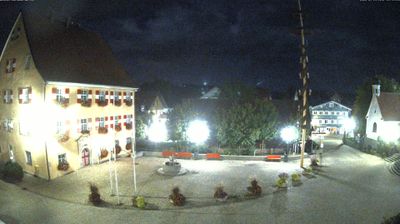




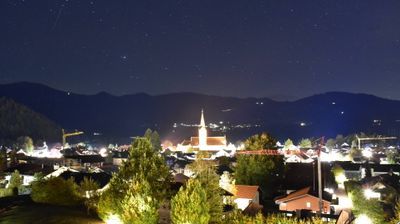

Among the towns of Bavaria, Lindenberg im Allgäu stands out for its historic straw-hat industry. Set in the rolling Westallgäu foothills north of the Alps, it belongs to a region shaped by pastureland and long-established small-scale crafts. Hatmaking brought Lindenberg particular importance from the 19th century onward, a legacy documented at the Deutsches Hutmuseum, which follows the process from straw plaiting to finished headwear. Its position on the western side of the Allgäu, near Baden-Württemberg and Austria, sets it apart from the larger Alpine resorts. Browse nearby webcams to see how Lindenberg im Allgäu sits within the wider Allgäu and Alpine foothills.
1 webcam
Built around the early medieval Duchy of Bavaria, Bavaria grew into Germany’s largest federal state. The Danube crosses its broad centre, while the Bavarian Alps form its southern edge and include the Zugspitze, Germany’s highest mountain. Munich is the state capital and the home of Oktoberfest, a festival rooted in an 1810 royal wedding. Beyond the metropolis, Franconia’s vineyards, Swabian towns and Alpine resorts reveal how varied this part of Germany can be. Browse additional webcams from the surrounding area to extend your view of Bavaria.
867 webcams
Germany stretches from the North Sea and Baltic Sea coasts to the Alps on its southern border, encompassing northern plains, river valleys and forested uplands. The Rhine, Danube and Elbe have long connected its regions, while the Black Forest and Bavarian Alps give the south a more dramatic relief. Berlin’s Brandenburg Gate and Museum Island reflect the capital’s role in German history and culture. Cologne Cathedral, a UNESCO World Heritage Site, rises above the Rhine, and the Bauhaus movement, founded in Weimar in 1919, transformed modern design far beyond Germany. Regional cooking, Christmas markets and brewing traditions bring further character to daily life. Browse additional webcams from the surrounding area to extend your view of Germany.
2.8K webcams