 Trogir: Trg Ivana Pavla II - St. Lawrence’s Cathedral
Trogir is best known in Croatia for its UNESCO-listed historic core. St. Lawrence’s Cathedral dominates Trg Ivana Pavla II, the principal square of the compact old town, which occupies a small island between the mainland and Čiovo Island on the Adriatic Sea. The cathedral was built mainly from the 13th to 15th centuries and is celebrated for Radovan’s Romanesque portal, dated 1240. Trogir developed as a Greek settlement and later became an important Dalmatian town under Venetian rule; its tightly layered streets, limestone houses and civic buildings preserve that long urban history. The square remains the natural meeting point at the centre of this fortified coastal town.
Generated by AI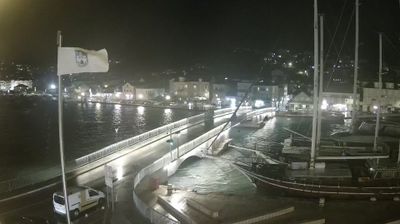


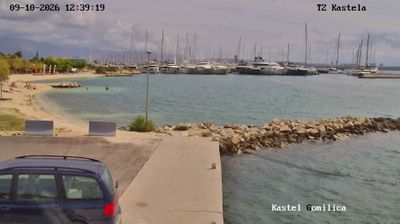
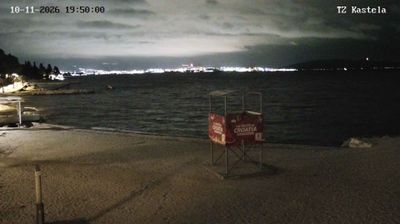

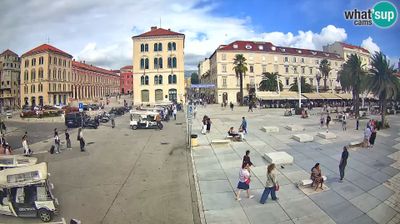
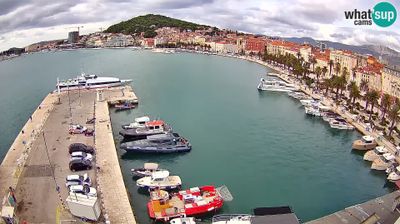


The landscape around Trogir is a low Adriatic shore of islands and narrow channels, which has shaped both the town’s compact form and its maritime economy. The historic core occupies a small island between the mainland and Čiovo, linked by bridges and facing the Adriatic Sea. Inscribed on UNESCO’s World Heritage List in 1997, Trogir preserves a dense street plan inherited from antiquity and later medieval building. The Cathedral of St Lawrence is its leading monument, noted for Radovan’s Romanesque portal, dated 1240. The 15th-century Kamerlengo Fortress recalls the period of Venetian rule. Browse additional webcams in Split-Dalmatia County to see how Trogir’s island setting connects with the surrounding Adriatic coast.
2 webcams
Built around the Adriatic coast, island ports and routes linking the hinterland to the sea, Split-Dalmatia County grew into Croatia’s central Dalmatian region. Its territory extends from the Cetina River and the Biokovo range to the islands of Brač, Hvar, Šolta and Vis. At its urban heart, Split is defined by Diocletian’s Palace, a Roman imperial complex whose historic core is inscribed on the UNESCO World Heritage List. The Makarska Riviera, old fishing settlements and vineyards lend the county a strongly maritime Mediterranean character. Brač, where these coordinates lie, is known for its pale limestone. Discover other points of interest through webcams located across Split-Dalmatia County.
66 webcams
Croatia occupies a long Adriatic coastline in southeastern Europe. Its shore is broken into islands and sheltered coves, while the Dinaric Alps rise inland and the Danube forms part of its eastern border. Dubrovnik’s fortified old city faces the sea, and Split grew around Diocletian’s Palace, a Roman complex begun in the early fourth century. Inland, Plitvice Lakes National Park is known for terraced lakes linked by waterfalls and has been a UNESCO World Heritage Site since 1979. Istrian olive groves, Zagreb and Slavonia’s vineyards reveal distinct regional identities. Explore nearby webcam locations that provide complementary perspectives on the Adriatic coast and Croatia’s interior.
381 webcams