 Warthausen: › South
Warthausen has served as a rural settlement in Upper Swabia since the Middle Ages. The municipality lies in the Riß valley, north of Biberach an der Riß, where cultivated fields and scattered farmsteads shape the countryside. Biberach Airfield stands on this open plain, reflecting the area's practical mix of agriculture and local aviation. Above the settlement, Warthausen Castle recalls the local aristocratic past. The writer Christoph Martin Wieland lived here from 1760 to 1769 in the household of Count Stadion, before his later work in Weimar. The Südbahn railway also connects Warthausen with Ulm and Friedrichshafen, placing the community on an important Upper Swabian north–south route.
Generated by AI

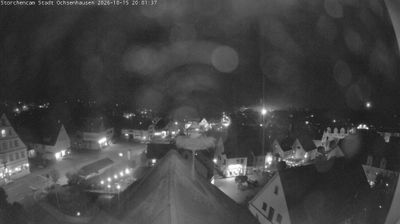
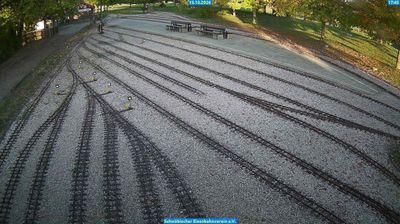

Built around a medieval castle above the Riß valley, Warthausen grew into a small Upper Swabian municipality north of Biberach an der Riß. The Riß, a tributary of the Danube, shapes the local setting of cultivated fields and scattered settlements. Schloss Warthausen remains the town’s defining historic landmark. During the 1760s, the writer Christoph Martin Wieland spent important years here in the circle of Count Anton Heinrich Friedrich von Stadion, linking Warthausen with the German Enlightenment. Browse other webcams across Upper Swabia to place this setting in a wider geographic context.
1 webcam
Baden-Württemberg is best known within Germany for the Black Forest, the wooded upland region that shapes much of the state’s southwest. Its terrain also reaches from the Upper Rhine plain and its wine-growing areas to the limestone ridges of the Swabian Jura, while Lake Constance marks part of the southern frontier. Stuttgart, the state capital, is closely tied to the automobile industry and hosts the Mercedes-Benz Museum and Porsche Museum. Heidelberg’s old town and castle add another important strand to the region’s identity, alongside renowned universities, spas and regional cooking. Find related webcams in the surrounding area to build a fuller picture of Baden-Württemberg.
527 webcams
Germany stretches from the North Sea and Baltic Sea coasts to the Alps on its southern border, encompassing northern plains, river valleys and forested uplands. The Rhine, Danube and Elbe have long connected its regions, while the Black Forest and Bavarian Alps give the south a more dramatic relief. Berlin’s Brandenburg Gate and Museum Island reflect the capital’s role in German history and culture. Cologne Cathedral, a UNESCO World Heritage Site, rises above the Rhine, and the Bauhaus movement, founded in Weimar in 1919, transformed modern design far beyond Germany. Regional cooking, Christmas markets and brewing traditions bring further character to daily life. Browse additional webcams from the surrounding area to extend your view of Germany.
2.5K webcams