 Sarzeau: Port Saint Jacques
The landscape around Port Saint-Jacques is a low, indented Atlantic shoreline governed by pronounced tides, which has shaped both the built environment and local life. On the southern coast of the Rhuys Peninsula, this small harbour belongs to Sarzeau and faces Quiberon Bay, the broad stretch of water between the peninsula and Belle-Île-en-Mer. Its quays serve as a departure point for passenger crossings to Belle-Île, giving the port a practical maritime role beyond its residential waterfront. Tidal flats and sheltered berths underline the changing rhythm of the coast. Inland, Sarzeau is associated with Château de Suscinio, the former residence of the Dukes of Brittany, set amid the peninsula’s fields and shorelines.
Generated by AI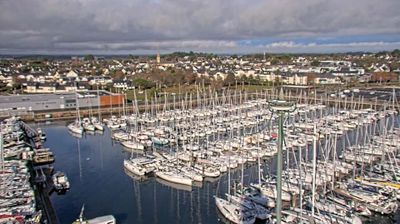
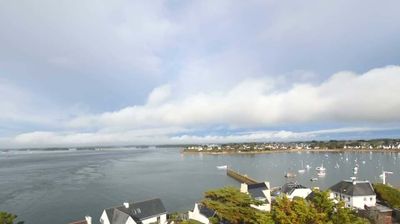
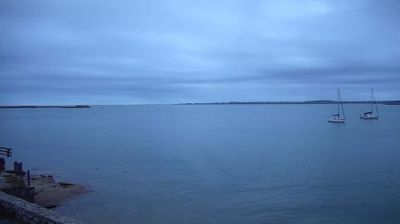

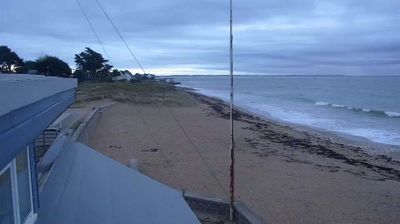
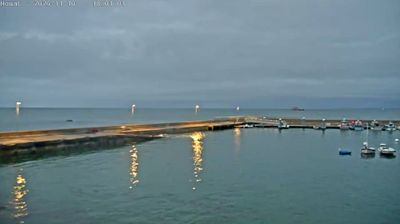
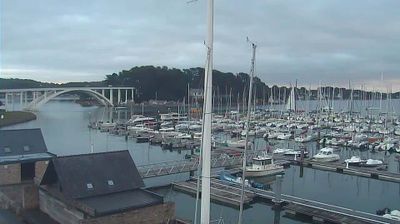

Among the towns of Brittany, Sarzeau stands out for its setting between the Gulf of Morbihan and the Atlantic coast of the Rhuys Peninsula. Its extensive commune includes sheltered coves, tidal marshes and beaches, shaped by the meeting of inland waters and open sea. The Château de Suscinio is Sarzeau’s defining historic monument: a fortified medieval residence associated with the Dukes of Brittany, standing near the coast and its former marshlands. Small harbours and coastal hamlets underline the area’s enduring maritime identity. Continue through nearby webcams to explore different parts of Sarzeau and the Rhuys Peninsula.
1 webcam
Brittany has served as a cultural crossroads within northwestern France since the medieval era. Occupying a broad peninsula between the English Channel and the Atlantic Ocean, it is shaped by the ancient Armorican Massif, a terrain of granite uplands, farmland and deeply indented shores. The region retains a strong Breton identity alongside its French character; the Breton language, related to the Celtic languages of Britain, is still taught and heard in parts of the region. Prehistoric monuments are another enduring marker, with the Carnac stones among Europe’s most important megalithic sites. Port cities, fishing traditions and maritime foodways give the coast a distinct place in French life. Browse additional webcams from the surrounding area to extend your view of Brittany.
171 webcams
The Atlantic and Mediterranean coastlines, together with the Alps, Pyrenees and broad river basins, define much of France — they support maritime trade, farming, wine regions and travel throughout the year. The Seine runs through Paris, where the Eiffel Tower and the Louvre are among Europe’s most recognised landmarks. The Loire Valley is known for Renaissance châteaux, while Mont-Saint-Michel rises from a tidal bay in Normandy. Regional food traditions are equally distinctive, from Breton seafood to Provençal cooking, with bread, cheese and wine central to everyday life. France’s global cultural influence is evident in its language, literature, fashion and cinema. View additional webcams nearby to better understand how France’s coasts, plains and mountain borders relate to their surroundings.
2.2K webcams