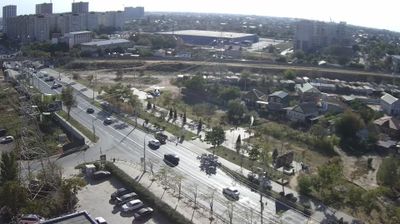
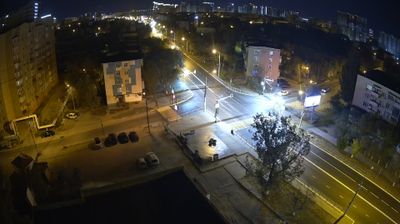
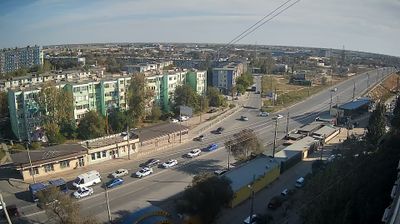
 Astrakhan: Астрахань, Боевая, 126 к10
Few places in Astrakhan Oblast have a history as closely tied to trade on the Volga as Astrakhan. The city stands in the low-lying Volga delta, where channels and islands have long shaped movement between inland Russia and the Caspian. After Ivan IV’s forces conquered the Astrakhan Khanate in 1556, a Russian fortress was founded here two years later. The Astrakhan Kremlin, developed from that stronghold, remains the city’s defining historic ensemble. River commerce subsequently connected Astrakhan with the Caucasus, Central Asia and Iran, helping form its varied cultural character. Broad urban avenues, port activity and delta waterways still give this regional capital a distinctly southern, river-oriented identity.
Generated by AI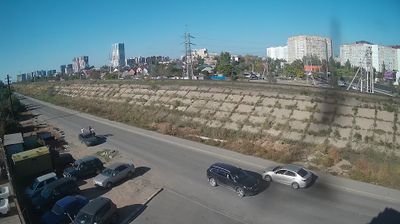

Built around a Russian fortress founded in 1558, Astrakhan grew into the administrative centre of Astrakhan Oblast on the Volga Delta. Set where the Volga divides into channels before reaching the Caspian Sea, the city has long connected river traffic, steppe country and Caspian trade. Its white-walled Astrakhan Kremlin, erected from the late 16th century, remains the clearest marker of the city’s role after Muscovy annexed the Astrakhan Khanate. Within its walls, the five-domed Assumption Cathedral is a prominent part of the historic core. Markets and local cooking reflect the delta’s fishing traditions and the city’s Volga-Caspian character. Move on to other webcams in Astrakhan Oblast to compare landscapes and settings around the Volga Delta.
64 webcams
Astrakhan Oblast combines arid steppe with a sprawling river delta in a way that reflects its position between the Lower Volga and the Caspian Sea. The Volga breaks into many channels here before reaching the sea, creating reedbeds, islands and fishing grounds that distinguish this southern Russian region. Astrakhan, the regional capital, stands on the river’s branches and preserves the white-stone Astrakhan Kremlin, whose fortifications were built in the late 16th century. The area has long connected river transport with Caspian trade and communities of the Volga frontier. Summers are hot and dry beyond the delta, while waterways remain central to life in riverside settlements. Browse other webcams across Astrakhan Oblast to place this Lower Volga setting in a wider geographic context.
69 webcams
Russia has served as a major power between Europe and Asia since the 16th century. Its territory crosses eleven time zones, extending from the Baltic coast and the East European Plain over the Ural Mountains to the Pacific. The Volga, Europe’s longest river, runs through a core of historic Russian settlement, while Lake Baikal in Siberia is the world’s deepest lake. Moscow’s Kremlin and Red Square stand at the centre of the capital’s political and architectural heritage; Saint Petersburg’s Hermitage Museum occupies the Winter Palace. Orthodox churches, Russian-language literature, ballet and long-distance rail travel remain familiar reference points in a country of immense regional contrasts. Continue with other webcams from Russia to see how this part of northern Eurasia connects regionally.
462 webcams