 Tomsk
Tomsk occupies a river terrace on the Tom River in Tomsk Oblast. Founded in 1604 as a Russian fortress, it grew into an administrative and educational centre of Siberia. Tomsk State University, established in 1878, was the first university in the Asian part of Russia, and its presence still gives the city a scholarly identity. Central streets combine formal civic buildings and public parks with an exceptional surviving collection of carved wooden houses, a tradition that distinguishes Tomsk from many Siberian regional capitals. Lenin Avenue forms the principal urban axis, while older quarters retain a lower-scale pattern of timber homes and courtyards.
Generated by AI

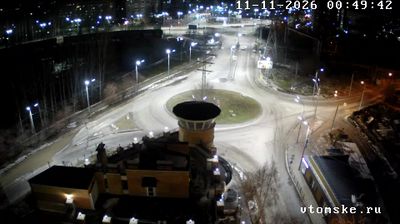

Tomsk is best known within Siberia for its surviving wooden architecture, whose carved façades remain a defining part of the city centre. Set on the Tom River in western Siberia, it grew from a 1604 fortress into an important administrative and educational centre. Tomsk State University, founded in 1878 as the first university in Siberia, gives the city a scholarly identity still palpable around its historic campus. Early-20th-century timber houses, including elaborate “lacework” residences, stand alongside merchant-era streets and later Soviet buildings, making Tomsk notably different from many large Siberian cities. Discover other points of interest through webcams located across Tomsk Oblast.
5 webcams
The Ob River and its broad floodplain define much of Tomsk Oblast - waterways, taiga and wetlands have long shaped settlement, transport and resource industries. This vast section of the West Siberian Plain is marked by forests, marshes and numerous tributaries, with long winters central to its seasonal rhythm. Tomsk, the oblast capital, was founded in 1604 and is noted for its surviving wooden architecture and academic life, including Tomsk State University. Forestry and oil and gas production remain important to the regional economy. Browse additional webcams from the surrounding area to extend your view of Tomsk Oblast.
9 webcams
Russia has served as a major power between Europe and Asia since the 16th century. Its territory crosses eleven time zones, extending from the Baltic coast and the East European Plain over the Ural Mountains to the Pacific. The Volga, Europe’s longest river, runs through a core of historic Russian settlement, while Lake Baikal in Siberia is the world’s deepest lake. Moscow’s Kremlin and Red Square stand at the centre of the capital’s political and architectural heritage; Saint Petersburg’s Hermitage Museum occupies the Winter Palace. Orthodox churches, Russian-language literature, ballet and long-distance rail travel remain familiar reference points in a country of immense regional contrasts. Continue with other webcams from Russia to see how this part of northern Eurasia connects regionally.
466 webcams