 Drebach
The landscape around Drebach is formed by the rolling, partly wooded foothills of the Ore Mountains, which has shaped both the built environment and local life. This Saxon municipality lies on the northern side of a range long associated with mining and mountain settlement. Drebach is distinguished by its observatory and planetarium, institutions that continue a strong local interest in astronomy. The transit of Venus in 1761 was observed here and remains an important part of the community's identity. Today, Drebach combines the quiet character of a smaller Ore Mountains settlement with a scientific tradition that gives it a distinctive place in the region.
Generated by AI



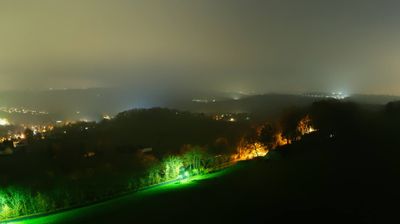
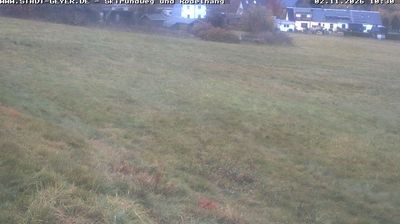
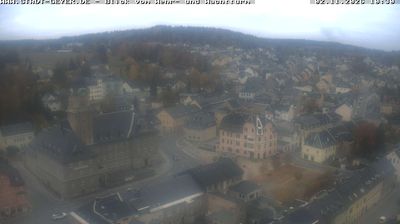

The Ore Mountains frame Drebach — this Saxon municipality lies among rolling, partly wooded uplands where fields and dispersed settlements set the rhythm of rural life. It is especially known for the Drebach Crocus Meadows, which bloom in early spring and are celebrated during the annual Crocus Festival. Drebach Observatory and Planetarium provides a public focus for astronomy in the area. The municipality also includes Scharfenstein, where Schloss Scharfenstein stands above the Zschopau valley. Find related webcams in the surrounding Ore Mountains to build a fuller picture of Drebach and Saxony.
7 webcams
Saxony is renowned across Germany for Meissen porcelain, first produced in the town of Meissen in 1710. The state stretches from the Ore Mountains on the Czech border to the Elbe valley, whose banks include Dresden, Saxony’s capital. Dresden’s reconstructed Frauenkirche and the baroque Zwinger reflect its role as a historic court city, while Leipzig has long been associated with trade fairs and Johann Sebastian Bach, who worked at St Thomas Church. East of Dresden, the Elbe Sandstone Mountains create the striking rock country of Saxon Switzerland. Move on to other webcams in the region to compare landscapes and settings around Saxony.
168 webcams
Germany stretches from the North Sea and Baltic Sea coasts to the Alps on its southern border, encompassing northern plains, river valleys and forested uplands. The Rhine, Danube and Elbe have long connected its regions, while the Black Forest and Bavarian Alps give the south a more dramatic relief. Berlin’s Brandenburg Gate and Museum Island reflect the capital’s role in German history and culture. Cologne Cathedral, a UNESCO World Heritage Site, rises above the Rhine, and the Bauhaus movement, founded in Weimar in 1919, transformed modern design far beyond Germany. Regional cooking, Christmas markets and brewing traditions bring further character to daily life. Browse additional webcams from the surrounding area to extend your view of Germany.
2.8K webcams