 Schmalkalden: Wilhelmsburg Castle
Few towns in Thuringia are as deeply shaped by the Protestant Schmalkaldic League as Schmalkalden. Formed here in 1531, this alliance of Lutheran princes and cities became a leading force in the Reformation-era conflict with Emperor Charles V. The town lies in the Schmalkalde valley on the southwestern edge of the Thuringian Forest, where wooded hills enclose its historic centre. Wilhelmsburg Castle was built for Landgrave William IV between 1585 and 1590 and ranks among Germany’s notable Renaissance residences. Timber-framed houses, the late-Gothic St George’s Church and the market square recall Schmalkalden’s centuries as a Hessian town. Metalworking, long important to the local economy, remains part of the town’s identity.
Generated by AI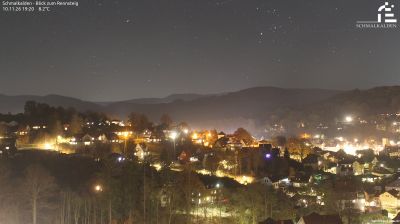
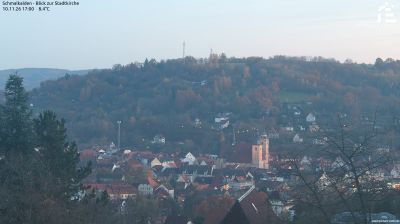

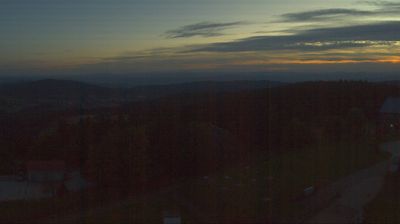
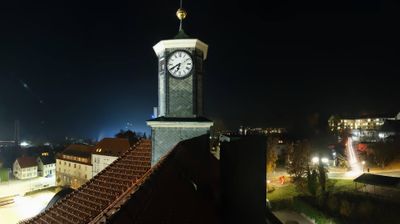

Schmalkalden is best known within Thuringia for its exceptionally well-preserved half-timbered Old Town. The town lies on the Schmalkalde River in southwestern Thuringia, close to the wooded heights of the Thuringian Forest. In 1531, Lutheran princes formed the Schmalkaldic League here, making the town an important setting in the early history of the Reformation. Renaissance Schloss Wilhelmsburg, built as a ducal residence, adds another distinct landmark above the historic centre. Continue with other webcams from the area to see how this part of southwestern Thuringia connects regionally.
3 webcams
Thuringia has served as a cultural crossroads within central Germany since the Middle Ages. Its varied terrain runs from the wooded ridges of the Thuringian Forest to the Saale valley in the east, with the long-distance Rennsteig trail following the forest’s crest. Erfurt, the state capital, preserves a historic centre marked by the cathedral and the Krämerbrücke, a bridge lined with inhabited buildings. Weimar is closely associated with Goethe and Schiller and with the Bauhaus movement, while Wartburg Castle near Eisenach recalls the region’s medieval past. Browse additional webcams from the surrounding area to extend your view of Thuringia.
76 webcams
Germany stretches from the North Sea and Baltic Sea coasts to the Alps on its southern border, encompassing northern plains, river valleys and forested uplands. The Rhine, Danube and Elbe have long connected its regions, while the Black Forest and Bavarian Alps give the south a more dramatic relief. Berlin’s Brandenburg Gate and Museum Island reflect the capital’s role in German history and culture. Cologne Cathedral, a UNESCO World Heritage Site, rises above the Rhine, and the Bauhaus movement, founded in Weimar in 1919, transformed modern design far beyond Germany. Regional cooking, Christmas markets and brewing traditions bring further character to daily life. Browse additional webcams from the surrounding area to extend your view of Germany.
2.8K webcams