 Harelbeke
The lake at De Gavers defines the setting of Harelbeke — its broad water surface, wooded banks and waterside paths give this part of the Leie valley a recreational character. De Gavers is a provincial domain shared by Harelbeke and Deerlijk, organised around a lake used for water sports and surrounded by areas for walking, cycling and outdoor leisure. The nearby River Leie has long shaped Harelbeke’s development as a Flemish town between Kortrijk and Ghent. Harelbeke is also the birthplace of Peter Benoit, the 19th-century composer who became an influential advocate of a Flemish musical tradition. The domain forms a calmer counterpoint to the town’s built-up centre and transport links.
Generated by AI
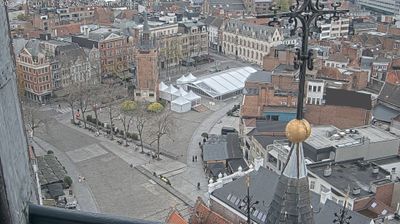
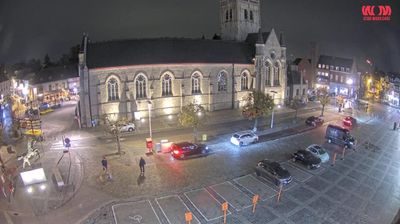


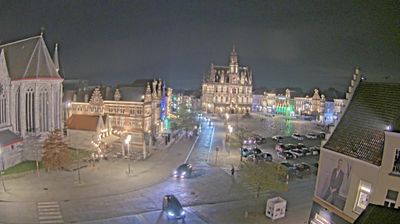


Built around a crossing on the River Leie, Harelbeke developed into a compact Flemish city between Kortrijk and Ghent. The Leie valley helped shape the region’s long association with flax cultivation and linen production, while the Kortrijk–Bossuit Canal adds another waterway to the local setting. Harelbeke is widely known in cycling as the start and finish town of the E3 Saxo Classic, a major one-day race on the Belgian spring calendar. Composer Peter Benoit, an important figure in Flemish music, was born here in 1834. Discover other points of interest through webcams located across Flanders.
2 webcams
Flanders occupies the low-lying northern half of Belgium. Its terrain runs from the North Sea coast and reclaimed polders to fertile river plains, with the Scheldt linking cities and ports before reaching the sea in the Netherlands. Dutch is the principal language, and the region's historic towns retain a strong civic identity: Bruges is known for its medieval centre, while Antwerp developed into one of Europe’s major port cities and a global diamond-trading centre. Flemish painting, lace-making and beer brewing remain central to the cultural story, alongside a contemporary design and food scene. Continue through nearby webcams to explore different parts of Flanders.
50 webcams
Belgium occupies a low-lying North Sea coastline and river plain in northwestern Europe. Dutch-speaking Flanders lies largely to the north, while French-speaking Wallonia reaches south towards the wooded Ardennes; Brussels is officially bilingual. The Scheldt and Meuse have long connected Belgian cities with the North Sea and continental Europe. Brussels’ Grand-Place, framed by ornate guildhalls and the Town Hall, is a UNESCO World Heritage site. Medieval Bruges retains canals and merchant architecture, while Antwerp remains a major port on the Scheldt. Belgian beer culture is recognised by UNESCO as intangible cultural heritage. See how Belgium connects with the North Sea coast and neighbouring regions by browsing webcams nearby.
99 webcams