 Rock Springs: I 80 Elk Street - West
Rock Springs has served as a coal-mining and railroad centre in southwestern Wyoming since the late 19th century. Built beside Bitter Creek, a tributary of the Green River, it expanded when Union Pacific developed local coalfields for steam locomotives. The city was the site of the Rock Springs massacre in 1885, a violent anti-Chinese attack that remains a significant chapter in Wyoming history. Interstate 80 now makes Rock Springs an important highway stop, and freight traffic reflects its position amid the broad, semi-arid terrain of the Green River Basin. Its International Day celebration acknowledges the immigrant communities that helped shape this former mining town.
Generated by AI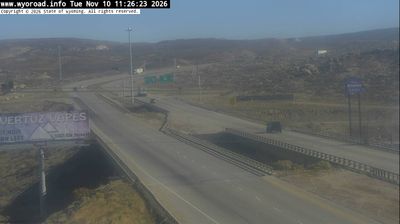
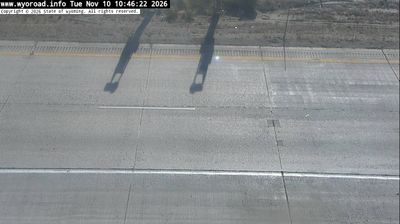

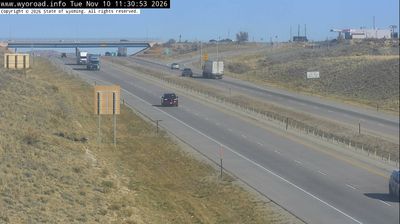

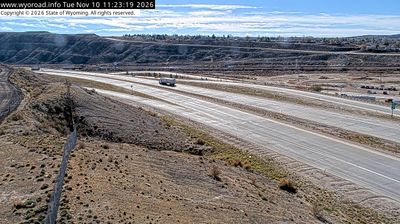
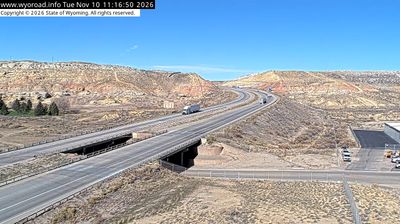

Built around coal mines and the Union Pacific Railroad, Rock Springs grew into the largest city in southwestern Wyoming. It lies beside Bitter Creek in the high-desert country of the Red Desert, where wide horizons and sagebrush terrain define the surrounding landscape. Coal drew workers from many countries, shaping a notably diverse local community; that heritage is celebrated at the city’s annual International Day festival. The 1885 Rock Springs massacre remains an important and painful chapter in both the city’s history and the history of Chinese immigration in the United States. Discover other points of interest through webcams located across Wyoming.
13 webcams
Wyoming stretches from the Montana border to its frontiers with Colorado and Utah, encompassing the high Rockies, broad basins, and Great Plains. The Continental Divide crosses the state, while the Wind River and Bighorn River drain contrasting sides of its interior. In the northwest, Yellowstone National Park—established in 1872 as the world’s first national park—and Grand Teton National Park place geothermal country and sharp mountain relief at the centre of Wyoming’s identity. Ranching remains integral to its open-country culture, alongside communities shaped by railroads, energy, and outdoor travel. Discover how Wyoming connects with the wider American West by browsing webcams nearby.
695 webcams
The Atlantic, Pacific and Gulf coasts define much of the United States — their ports, fisheries and trade routes have long tied the country’s economy to the wider world. Between them, the Rocky Mountains, Great Plains and Mississippi River basin form sharply different regions, from high western ranges to broad agricultural heartlands. Cities carry much of the national story: New York’s Statue of Liberty, a gift from France dedicated in 1886, remains an enduring symbol, while Washington, DC concentrates major federal institutions. Indigenous nations have shaped these lands for millennia, and their living cultures remain essential to the country’s identity. Find related webcams in the surrounding areas to build a fuller picture of the United States.
32K webcams