 Hosvik
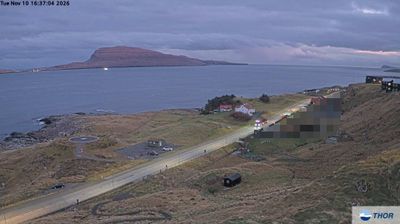
Built around a sheltered inlet on the eastern coast of Streymoy, Hósvík grew into a small Faroese settlement. The village lies by Tangafjørður, one of the narrow inlets that divide the island’s coast, where treeless moorland descends toward rocky shores and the North Atlantic. Houses are dispersed across the slope rather than concentrated in an urban centre, reflecting the terrain and scale of this island community. Hósvík Church, consecrated in 1929, is a local landmark whose restrained form belongs to the building tradition of the Faroes. Roads connect Hósvík with other parts of Streymoy, while the coast remains central to its character.
Generated by AI
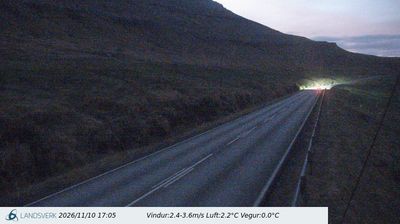

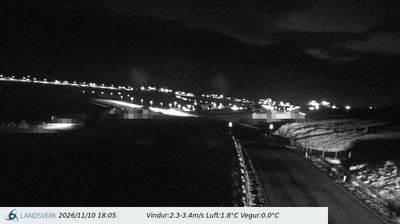

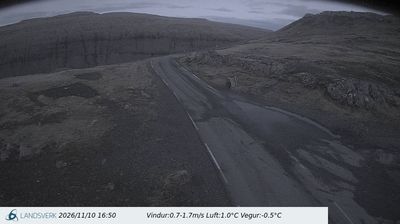
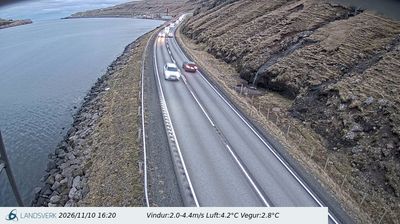

Streymoy has been the political heartland of the Faroe Islands since the Viking Age. Tórshavn, the archipelago’s capital, lies on its southeastern coast, and the historic Tinganes peninsula recalls the site of an early Faroese assembly. Narrow fjords cut into steep, grass-covered slopes, while the Sundini strait separates Streymoy from Eysturoy. At Kirkjubøur, the ruins of medieval St Magnus Cathedral stand beside Roykstovan, a historic timber farmhouse. Explore nearby webcam locations that provide complementary perspectives on Streymoy and the Faroe Islands.
18 webcams
Built around Norse settlements sustained by North Atlantic sea routes, the Faroe Islands developed into a self-governing archipelago within the Kingdom of Denmark. Eighteen rugged islands lie between Norway and Iceland, where steep basalt cliffs, grass-roofed houses and narrow fjords define the coast. The capital, Tórshavn, stands on Streymoy, while the sea stacks at Drangarnir and Lake Sørvágsvatn on Vágar reveal the islands’ striking geology. Faroese, descended from Old Norse, remains the everyday language, and the Løgting in Tórshavn is among the world’s oldest parliaments. Fishing and sheep farming continue to shape local life alongside a contemporary Nordic food and arts scene. Discover other points of interest through webcams located across the Faroe Islands.
50 webcams