 Kita Ward
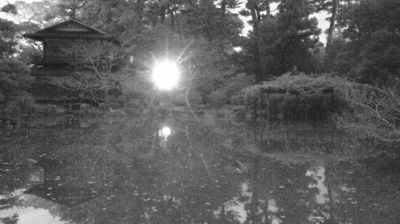
Few places in Kyoto Prefecture have a history as closely tied to the culture of the Muromachi shogunate as Kinkaku-ji. Formally named Rokuon-ji, this Rinzai Zen temple began as the retirement villa of shogun Ashikaga Yoshimitsu and was converted into a temple after his death in 1408. Its three-storey Golden Pavilion is sheathed in gold leaf on the upper two storeys and stands beside Kyōko-chi, the Mirror Pond, in a carefully composed strolling garden. The original pavilion was destroyed by arson in 1950; the present reconstruction dates from 1955. Kinkaku-ji forms part of the UNESCO-listed Historic Monuments of Ancient Kyoto, inscribed in 1994. Wooded slopes around the temple give this northern Kyoto site a secluded setting.
Generated by AI





Kita Ward is known across Kyoto Prefecture for Kitayama cedar, the carefully cultivated sugi long used for refined architectural timber. The ward reaches from Kyoto’s built-up north to the wooded Kitayama hills, while the Kamo River runs through its eastern side. Kamigamo Shrine, formally Kamo-wakeikazuchi Shrine, is among Kyoto’s oldest Shinto sanctuaries and forms part of the UNESCO-listed Historic Monuments of Ancient Kyoto. Daitoku-ji, a major Zen temple complex, anchors the southern area, where subtemples, gardens and tea culture have shaped the district’s identity. Continue with other webcams from the area to see how this part of northern Kyoto connects regionally.
1 webcam
The terrain of Kyoto Prefecture ranges from the rugged Sea of Japan coast in the north to the lowlands of the Kyoto Basin in the south, creating pronounced contrasts within a compact area. The Tango Peninsula and the celebrated sandbar of Amanohashidate define the northern shore, while the prefectural capital is threaded by the Kamo River. Kyoto was Japan’s imperial capital for more than a millennium, and its temples, shrines and traditional districts remain central to the country’s cultural identity. Uji, south of Kyoto City, is also closely associated with Japanese green tea. Discover other points of interest through webcams located across Kyoto Prefecture.
8 webcams
Among the countries of East Asia, Japan stands out for its volcanic archipelago, stretching from the cool north of Hokkaido to subtropical Okinawa. Mount Fuji, the nation’s highest mountain, rises above central Honshu, while the Pacific Ocean and the Seto Inland Sea have long shaped settlement, fishing and travel. Tokyo pairs dense urban life with major museums and neighbourhood traditions; Kyoto preserves temples, gardens and the legacy of Japan’s imperial court. Seasonal customs give journeys a changing rhythm, from spring cherry blossom viewing to autumn leaves. Regional cooking is equally varied, with sushi, ramen and local specialties reflecting coastlines, climate and agriculture. Explore nearby webcam locations that provide complementary perspectives on Japan’s islands, cities and mountain regions.
1.3K webcams