 Ivan Dolac: Plaža Ivan Dolac
Plaža Ivan Dolac occupies a small pebble cove on the southern coast of Hvar Island in Croatia’s Split-Dalmatia County. It faces the open Adriatic, where the island’s steep southern slopes descend to an indented shore of pale stone, low rocks and small bathing coves. Ivan Dolac is a compact settlement rather than a large resort, shaped by vineyards and olive groves on the hills above the sea. The locality is closely associated with Hvar’s Plavac Mali wines, made from a Croatian red grape that thrives in the island’s dry, stony terrain. Pine trees and scattered coastal houses give this part of the shore a distinctly residential, small-scale character.
Generated by AI
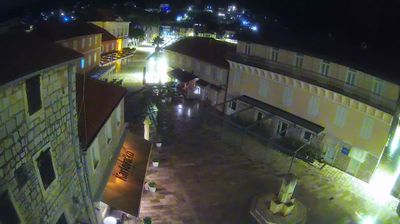

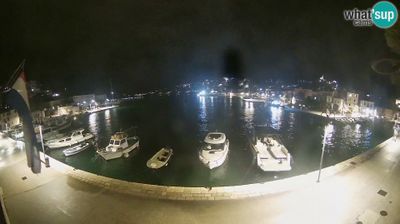
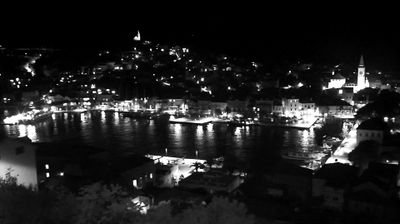

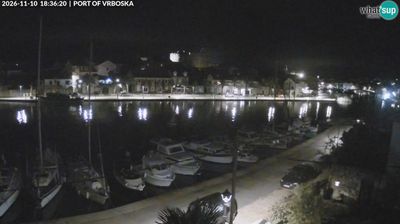


The landscape around Ivan Dolac is a steep, sun-exposed stretch of Hvar’s southern coast above the Adriatic Sea, which has shaped both its compact settlement pattern and its wine-growing economy. The hamlet occupies slopes between limestone terrain and the shore, on an island known for long, dry summers. Vineyards are central to local identity: Ivan Dolac is closely associated with Plavac Mali, the red grape cultivated across southern Hvar. Small beaches and coves lie below the houses, while roads across the island link the area with inland settlements and ferry ports. Browse additional webcams from the surrounding area to extend your view of Hvar Island and central Dalmatia.
1 webcam
Built around the Adriatic coast, island ports and routes linking the hinterland to the sea, Split-Dalmatia County grew into Croatia’s central Dalmatian region. Its territory extends from the Cetina River and the Biokovo range to the islands of Brač, Hvar, Šolta and Vis. At its urban heart, Split is defined by Diocletian’s Palace, a Roman imperial complex whose historic core is inscribed on the UNESCO World Heritage List. The Makarska Riviera, old fishing settlements and vineyards lend the county a strongly maritime Mediterranean character. Brač, where these coordinates lie, is known for its pale limestone. Discover other points of interest through webcams located across Split-Dalmatia County.
66 webcams
Croatia occupies a long Adriatic coastline in southeastern Europe. Its shore is broken into islands and sheltered coves, while the Dinaric Alps rise inland and the Danube forms part of its eastern border. Dubrovnik’s fortified old city faces the sea, and Split grew around Diocletian’s Palace, a Roman complex begun in the early fourth century. Inland, Plitvice Lakes National Park is known for terraced lakes linked by waterfalls and has been a UNESCO World Heritage Site since 1979. Istrian olive groves, Zagreb and Slavonia’s vineyards reveal distinct regional identities. Explore nearby webcam locations that provide complementary perspectives on the Adriatic coast and Croatia’s interior.
381 webcams