 Donji Miklouš: Čazma, Advent Ice skating
Tucked along the Česma River, Čazma, near Donji Miklouš, is a town whose character is shaped by lowland fields and the wooded rises of Bjelovar-Bilogora County. Its centre is focused on the medieval Church of St Mary Magdalene, a brick landmark recalling Čazma’s long-standing ecclesiastical role. The town lies in central Croatia between the Bilogora hills and the Moslavina region, while the Česma continues south as a tributary of the Sava. Local roads link its compact core with scattered settlements and farmland. Civic buildings, shops and cafés gather along the central streets before the built-up area gives way to the agricultural surroundings.
Generated by AI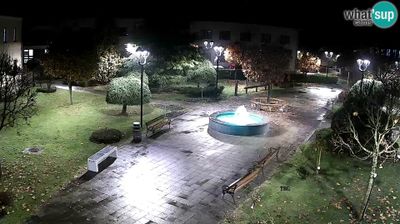
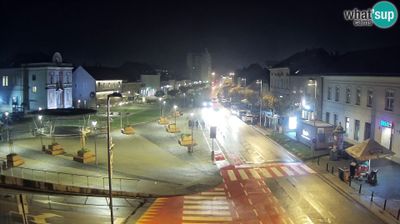
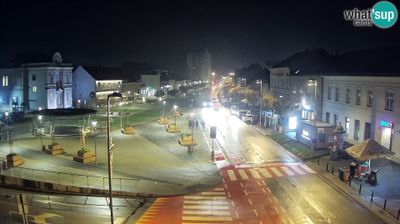
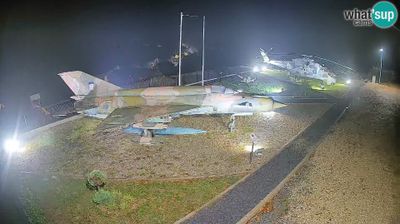
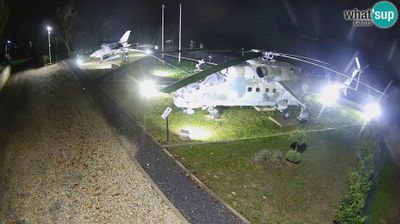
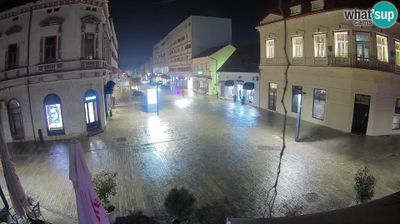
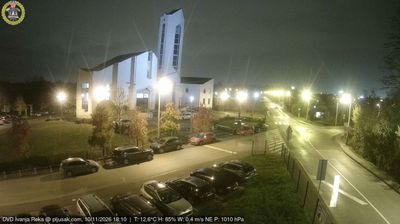

The Česma River basin defines the setting of Donji Miklous — cultivated fields, small woods and dispersed homes give this part of Moslavina a distinctly rural rhythm. The settlement lies in Bjelovar-Bilogora County, between the low Bilogora hills and the broader Sava lowlands, away from Croatia’s busy Adriatic routes. It falls within the administrative area of Čazma, whose 13th-century Church of St Mary Magdalene recalls the district’s medieval ecclesiastical importance. Donji Miklous is a useful point from which to understand inland Croatia’s agricultural heartland and the local roads linking its scattered villages. See how Donji Miklous fits within the wider Čazma area by browsing webcams nearby.
2 webcams
Bjelovar-Bilogora County occupies a lowland-and-hill belt in central Croatia. Its terrain moves from the wooded slopes of the Bilogora range to farmland crossed by the Česma and Ilova rivers, giving the county a distinctly rural character. Bjelovar, the administrative centre, was established in 1756 as a planned military town under the Habsburg Monarchy, and its broad central streets still reflect that origin. Daruvar adds another layer to the area’s identity, known for thermal waters and a long Czech cultural presence. Find related webcams in the surrounding area to build a fuller picture of Bjelovar-Bilogora County.
10 webcams
Croatia occupies a long Adriatic coastline in southeastern Europe. Its shore is broken into islands and sheltered coves, while the Dinaric Alps rise inland and the Danube forms part of its eastern border. Dubrovnik’s fortified old city faces the sea, and Split grew around Diocletian’s Palace, a Roman complex begun in the early fourth century. Inland, Plitvice Lakes National Park is known for terraced lakes linked by waterfalls and has been a UNESCO World Heritage Site since 1979. Istrian olive groves, Zagreb and Slavonia’s vineyards reveal distinct regional identities. Explore nearby webcam locations that provide complementary perspectives on the Adriatic coast and Croatia’s interior.
380 webcams