 Puck: Zielona Plaża - Puck Bay
Built around a sheltered harbour, Puck grew into a coastal town on the western shore of Puck Bay. This shallow bay forms part of the Gulf of Gdańsk and is sheltered from the open Baltic by the Hel Peninsula, giving Puck a long connection with fishing, sailing and other maritime activity. Zielona Plaża occupies a stretch of the town’s bayfront, close to the promenade and marina. Puck also holds a distinctive place in Poland’s national story: on 10 February 1920, General Józef Haller carried out the symbolic Wedding to the Sea here, marking Poland’s renewed access to the Baltic after the First World War. The annual commemoration keeps that episode present in the town’s civic calendar.
Generated by AI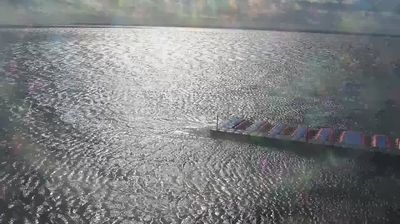
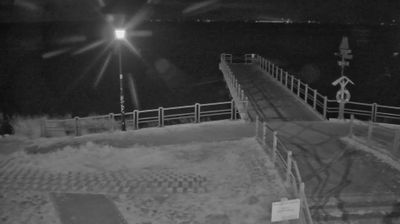


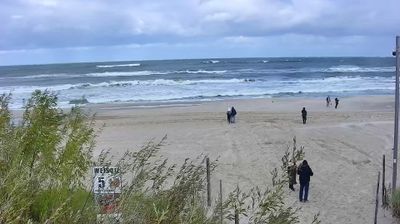

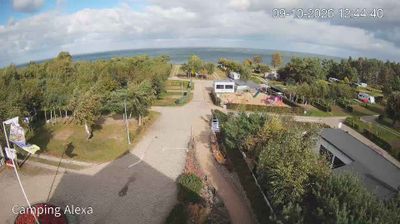


Puck lies on the western shore of Puck Bay on Poland’s Baltic coast, where shallow waters extend towards the Hel Peninsula and the low-lying Kashubian coast. Though compact, the town has played a lasting role in Poland’s maritime story. On 10 February 1920, General Józef Haller performed the symbolic “Wedding of Poland to the Sea” here, marking the country’s renewed access to the Baltic after the First World War. The Gothic parish church of Sts Peter and Paul anchors the old centre, while the waterfront leads to a marina and bay paths. See how Puck fits within the broader Pomeranian coast by browsing webcams nearby.
1 webcam
Pomeranian Voivodeship has served as an administrative region within Poland since 1999. Stretching from the Baltic coast to the wooded Kashubian Lake District, it brings together Poland’s maritime north and an inland country of lakes and forests. The Vistula reaches the sea near Gdańsk, while the coast includes the shifting dunes of Słowiński National Park. Gdańsk, a historic Baltic port and member of the Hanseatic League, anchors the Tri-City urban area with Sopot and Gdynia. Kashubian language and traditions remain an important part of the region’s identity, particularly west of Gdańsk. See how Pomeranian Voivodeship fits within northern Poland by browsing webcams nearby.
64 webcams
Poland stretches from the Baltic Sea coast in the north to the Carpathian Mountains along its southern frontier, encompassing broad lowlands, lake districts and upland ranges. The Vistula, the country’s longest river, links Kraków and Warsaw before reaching the Baltic near Gdańsk, while the Masurian Lake District is defined by a dense network of lakes. Kraków’s historic centre, including Wawel Castle, recalls Poland’s former royal capital; Warsaw’s rebuilt Old Town speaks to the city’s recovery after the Second World War. The Białowieża Forest preserves one of Europe’s last primeval lowland forests and is home to European bison. Follow how Poland’s regions relate to one another by browsing webcams across the country.
709 webcams