 Gniew: Województwo pomorskie, Rzeczpospolita Polska: Zamek
Tucked along the left bank of the Vistula River, Gniew is a town whose character is shaped by its commanding medieval castle. Gniew Castle was built by the Teutonic Order around the turn of the 13th and 14th centuries, its vast red-brick walls, corner towers and steep roofs reflecting the Brick Gothic tradition of northern Poland. After the town passed to the Polish Crown in 1466, the fortress became the seat of royal administrators. Below its walls, Gniew’s compact centre retains a market square, historic townhouses and the Gothic Church of St Nicholas. The castle’s elevated position gives the town a strong silhouette above the broad Vistula valley.
Generated by AI

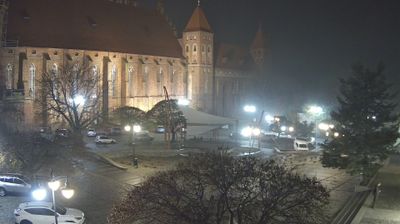
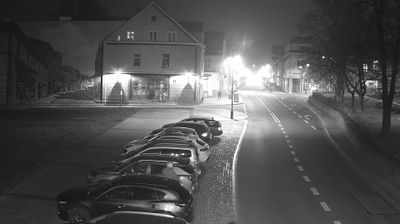


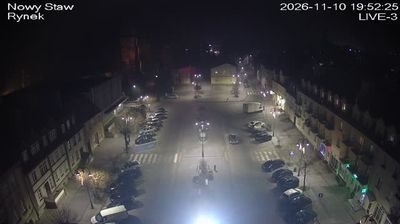



The Vistula defines the setting of Gniew — its broad valley and elevated bank have shaped a town that rises above the river. Brick Gothic Gniew Castle, built by the Teutonic Order around the turn of the 14th century, is the town’s principal landmark and recalls its role in the medieval state of the Order. Below the fortress, the compact Old Town follows a historic street pattern around its market square. Gniew remains a small Pomeranian town where the Vistula’s scale contrasts with the close-grained medieval centre. Continue through nearby webcams to explore different parts of Gniew and the Vistula valley.
3 webcams
Pomeranian Voivodeship has served as an administrative region within Poland since 1999. Stretching from the Baltic coast to the wooded Kashubian Lake District, it brings together Poland’s maritime north and an inland country of lakes and forests. The Vistula reaches the sea near Gdańsk, while the coast includes the shifting dunes of Słowiński National Park. Gdańsk, a historic Baltic port and member of the Hanseatic League, anchors the Tri-City urban area with Sopot and Gdynia. Kashubian language and traditions remain an important part of the region’s identity, particularly west of Gdańsk. See how Pomeranian Voivodeship fits within northern Poland by browsing webcams nearby.
64 webcams
Poland stretches from the Baltic Sea coast in the north to the Carpathian Mountains along its southern frontier, encompassing broad lowlands, lake districts and upland ranges. The Vistula, the country’s longest river, links Kraków and Warsaw before reaching the Baltic near Gdańsk, while the Masurian Lake District is defined by a dense network of lakes. Kraków’s historic centre, including Wawel Castle, recalls Poland’s former royal capital; Warsaw’s rebuilt Old Town speaks to the city’s recovery after the Second World War. The Białowieża Forest preserves one of Europe’s last primeval lowland forests and is home to European bison. Follow how Poland’s regions relate to one another by browsing webcams across the country.
717 webcams