 Zuydcoote: Live
Few places in Hauts-de-France have a history as closely tied to the Second World War as Zuydcoote. This small commune lies on France’s North Sea coast between Dunkirk and the Belgian border, where a wide beach meets a substantial belt of dunes. Its dune habitat forms part of the Dunes de Flandre, a protected coastal area of sand, grassland and scrub running along French Flanders. In May and June 1940, the area lay beside the perimeter of the Dunkirk evacuation. That episode inspired Robert Merle’s 1949 novel Weekend at Zuydcoote, later adapted for cinema. Today, trails cross the dunes above a long shoreline shaped by the North Sea.
Generated by AI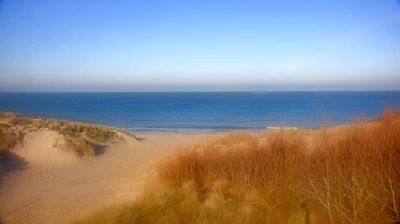
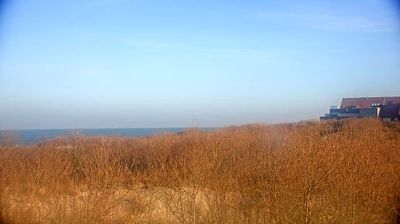
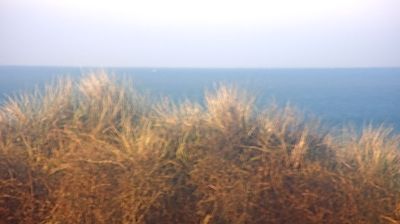
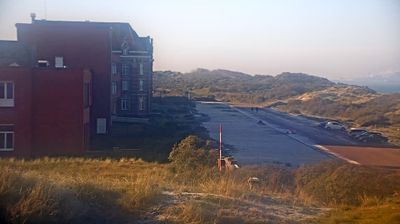
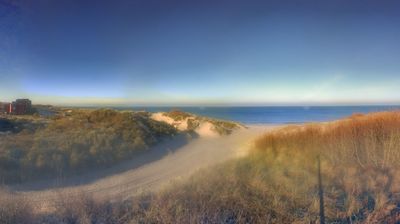

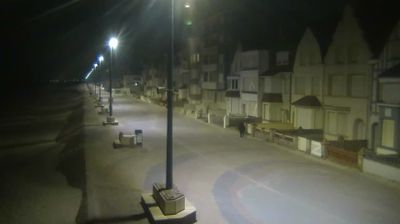


Tucked along France’s North Sea shoreline near Dunkirk, Zuydcoote is a place whose character is shaped by the coastal dune belt behind its broad sandy beach. The commune lies on the low-lying Flanders coast, where dune grassland meets the open horizon of the North Sea. Its name is closely associated with the Second World War through Robert Merle’s 1949 Prix Goncourt-winning novel Week-end à Zuydcoote, set during the Dunkirk evacuation. More than an urban resort, Zuydcoote remains a small coastal commune defined by space, wind and maritime weather. Browse additional webcams from the French Flanders coast to extend your view of Zuydcoote.
14 webcams
Formed through the 2016 merger of Nord-Pas-de-Calais and Picardy, Hauts-de-France became an administrative region spanning France’s northern frontier. The Somme crosses its broad, low-lying interior before reaching the English Channel, while the Opal Coast brings dunes, cliffs and busy Channel ports to the west. Around Albert and Péronne, cemeteries and memorials preserve the memory of the 1916 Battle of the Somme. Amiens, the regional capital, is marked by the Gothic Cathedral of Notre-Dame, a UNESCO World Heritage site. Lille adds a major urban and cultural centre close to Belgium. Continue with other webcams from the area to see how this part of northern France connects regionally.
84 webcams
The Atlantic and Mediterranean coastlines, together with the Alps, Pyrenees and broad river basins, define much of France — they support maritime trade, farming, wine regions and travel throughout the year. The Seine runs through Paris, where the Eiffel Tower and the Louvre are among Europe’s most recognised landmarks. The Loire Valley is known for Renaissance châteaux, while Mont-Saint-Michel rises from a tidal bay in Normandy. Regional food traditions are equally distinctive, from Breton seafood to Provençal cooking, with bread, cheese and wine central to everyday life. France’s global cultural influence is evident in its language, literature, fashion and cinema. View additional webcams nearby to better understand how France’s coasts, plains and mountain borders relate to their surroundings.
2.1K webcams